Environmental, Social, and Governance (ESG) at Element

Environmental, Social, and Governance at Element: Our ESG Framework
Our Purpose at Element is "Making tomorrow safer than today." Environmental, Social and Governance (ESG) responsibility are core to how we bring this purpose to life. At Element, we believe that the TIC industry can play a significant, and meaningful, role in leading the way in environmental sustainability, in partnership with customers around the world.
Our Commitment
As a business with purpose at its heart, we're proud of our strong ESG framework that has been in place for years.

Environmental Strategy and Targets
The environmental commitments around emissions form a critical part of our longer-term ESG plans. We recognize the importance of continuously developing our ESG framework. We achieve this through established internal processes, oversight and reporting so that corporate responsibility is reviewed and discussed at Executive and Board level.
203050% Reduction
2050Net Zero

The Intergovernmental Panel on Climate Change (IPCC) defines net-zero emissions as when the amount of greenhouse gases (GHGs) emitted globally is balanced by removals over a specific period.
In 2024 Element reset its targets to being net-zero in Scope 1, 2 and 3 by 2050. We report on our Scope 1 and Scope 2 GHG emissions via a third-party platform and where possible calculate at a site level so business units can work directly on relevant local initiatives and carbon reduction plans.
Our reporting is aligned with GHG Protocol Corporate Accounting and Reporting Standard (2015) and the recommendations of the TCFD.
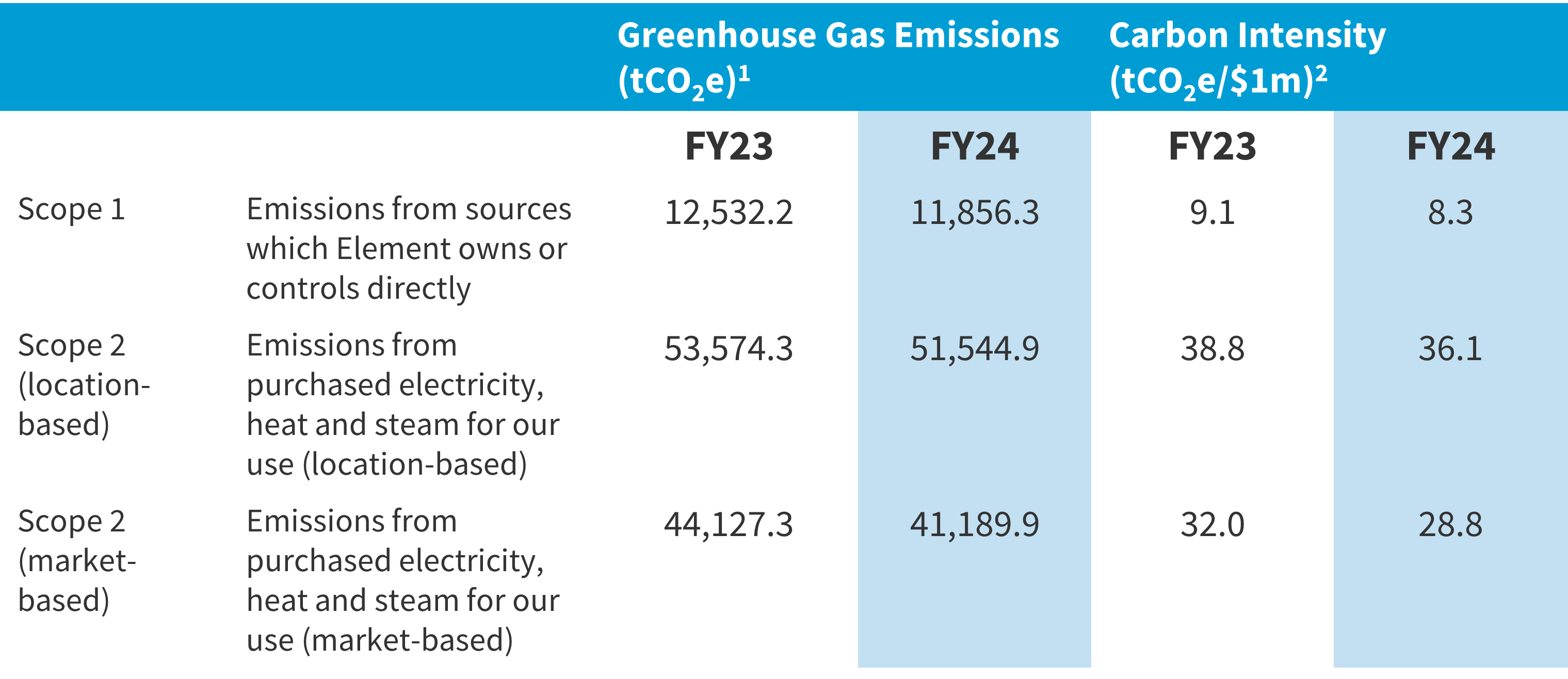
¹ The carbon emissions data presented in this report have undergone a limited assurance audit by an independent third-party auditor. This assurance process ensures the accuracy and completeness of our reported emissions figures.
² Carbon intensity refers to the tCO₂e per $m revenue
In 2024, as a reflection of our efforts Element saw a total reduction in Scope 1 and 2 emissions versus our 2023 baseline. Scope 1 carbon emissions reduced by 5% despite an increase in our site portfolio and revenue growth. Given we have purchased renewable energy certificates, Scope 2 performance has been reported using both a market and location-based method. Our market-based Scope 2 carbon emissions reduced by 7% as a result of our ESG strategies, including the procurement of renewable energy, communication to colleagues and the ongoing transition of our fleet to electric.
In line with our Standard Operating Procedure and the GHG Protocol, we are reporting Scope 1 and 2 emissions for both 2023 and 2024 for the first time. Given 2023 has the most robust and detailed reporting available out of our historic years, 2023 has been chosen and will continue to be used as our base year. Where a significant threshold is breached, a recalculation or shifting exercise will be carried out so that we can continue to calculate and track our carbon emissions accurately.
To calculate such metrics, both spend and activity-based methodologies were used. We will continue to transition away from a spend-based approach in 2025 and minimise the use of estimations and extrapolations to improve accuracy and specificity of data. Additionally, Element aims to refine the accounting mechanisms used to ensure clear visibility over future over Element's Scope 3 emissions, allowing us to identify top category emitters and therefore initiate engagement with critical suppliers to reduce carbon emissions.
Environmental Strategy Implementation
Regular environmental audits are conducted across Element locations, ensuring consistent standards and practices and demonstrating compliance with local environmental regulations at site level. We have policies in place to ensure compliance with all applicable environmental laws and regulations, appropriate to the countries in which we work, supported by robust monitoring systems. We prioritize continuous tracking and improvement of key environmental metrics.

Renewable Energy Procurement
Over 20% of Element's global electricity is sourced from renewable energy, and we will continue to migrate towards renewable energy contracts for all electricity usage.
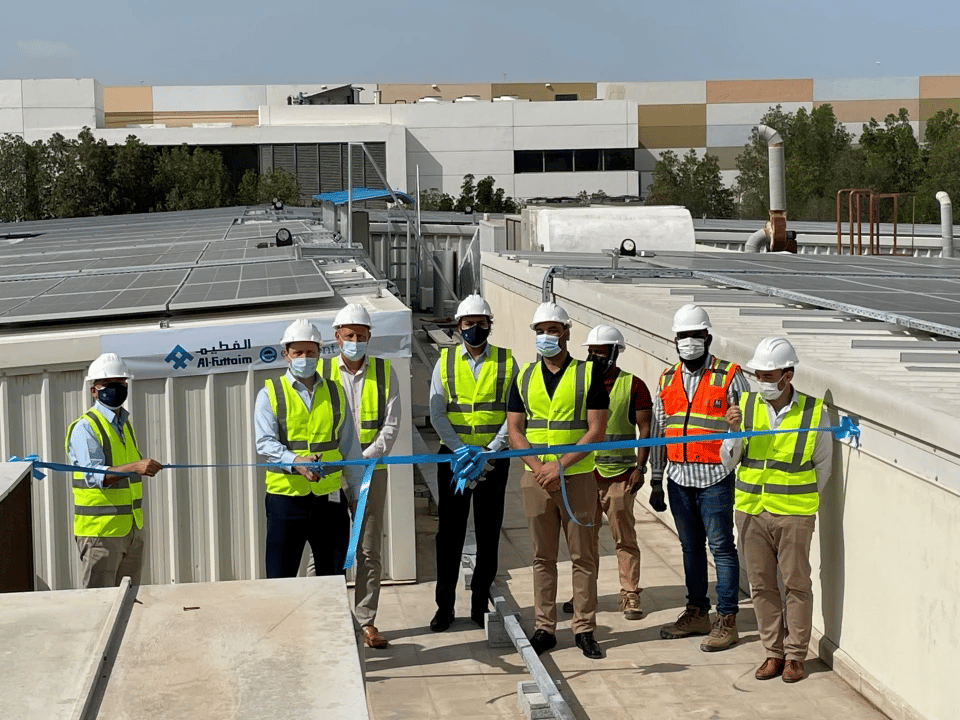
Energy production
Installation of solar panels on select properties, including laboratories in United Arab Emirates.

Electric vehicles
Investigation of transitioning our vehicle fleet to electric vehicles to reduce scope 1 emissions.
Our Safety, Health and Environmental (SHE) program drives environmental culture throughout the organization while ensuring compliance with relevant legal requirements.
Operational Safety and Environmental Protection
Our commitment to safety extends to environmental protection. Through our comprehensive safety management system, we ensure that our operations not only protect our people but also minimize environmental impact. Key elements include:
- Monthly compliance inspections that address both safety and environmental considerations
- Formal risk assessments for high-hazard work that evaluate environmental impacts
- Business Continuity Plans that incorporate environmental emergency response
- Regular training for safety leaders and managers that includes environmental protection components
- Group-wide deployment of accountability based on daily safety, quality, delivery and cost meetings
Social Responsibility Framework
We care about the impact we have on our people and the communities we are a part of. We have been working to make Element a more diverse, inclusive and equitable company. Our diversity makes us stronger and more able to make a positive difference in our local communities and to the broader society we are a part of. We continuously develop and monitor our social impact through established processes and metrics, ensuring alignment with global best practices and stakeholder expectations.
Diversity, Equity, and Inclusion Targets

- 30% female representation in leadership by 2030
- Ethnic representation in leadership: at least 10% BIPOC (Black, Indigenous, People of Color) in the UK and 25% in North America (US only, excluding Mexico and Canada) to reflect the communities in which we live and work
- Quarterly gender updates to track progress
Policy Implementation
- Diverse interview panels for all positions
- Requirement for hiring managers and Talent Acquisition partners to make good faith efforts in all searches to build diverse candidate slates
- Outreach to organizations supporting various dimensions of diversity including race, ethnicity, gender identity or expression, sexual orientation, age, disability, religious beliefs, nationality, parental, veteran, marital or civil partner status
Talent Development

- Women's Accelerator Program nurturing the growth of outstanding female colleagues
- GM Leadership Academy bringing together 34 General Managers annually for comprehensive development
- Regular inclusion training for all colleagues
- Ambassador program with 150 culture carriers throughout the organization
Wellbeing Strategy
When people feel supported at work, everyone benefits. That’s why we’ve prioritized building support systems that address what really matters in people's lives. Our Employee Assistance Programs provide confidential help when colleagues need it most, while our regular wellbeing events create opportunities for connection and learning together. We recognize that mental health is just as important as physical health, so we've developed dedicated programs and resources to help people manage stress and take care of their psychological wellbeing. We also understand that life happens outside of work, which is why our policies are designed to help colleagues balance their professional responsibilities with their personal lives.
Employee Engagement
As part of our Listening strategy, we are committed to ongoing colleague engagement. To support this, we’ve partnered with Willis Towers Watson, ensuring access to industry-leading benchmarking. This enables us to effectively listen to our colleagues and implement their feedback at both global and regional levels.
Our 2024 engagement initiatives have yielded strong results, including a 98% colleague response rate in our engagement surveys and a 75% sustainable engagement rate. We regularly conduct leadership learning sessions, wellbeing programs focusing on mental health awareness, and targeted initiatives to address workplace challenges like stress management and burnout prevention. Our Operating Board-sponsored, intersectional colleague resource networks are led by colleagues and help us attract and retain diverse talent.
Governance
Board and Committee Oversight
The Board has ultimate responsibility for climate risk management and our Environmental, Social, and Governance (ESG) framework, including those risks and opportunities related to climate change.
The Board receives a quarterly update on all ESG matters. This includes progress against our net-zero target by 2050, in addition to broader environmental initiatives such as the investment in hydrogen capabilities to drive global clean energy transition and advancement in battery testing. The Board is also updated with internal Governance, Social, and Reporting activities. The Board ensures that the company's ESG purpose aligns with the business strategy and customer proposition, oversees progress against targets, and controls activities to mitigate climate risks.
The Board is supported by the Sustainability Committee, newly implemented in 2024, in addition to the Investment Committee, Audit Committee, Remuneration Committee, and Compliance Committee.
The Sustainability Committee, chaired by the Chief Financial Officer and supported by these committees, formally reviews policies and strategies related to ESG, including the review of climate change as a principal risk, on a quarterly basis. It receives updates on sustainable strategies, proposed targets, and external reporting practices from the ESG Global Taskforce and Regional Sustainability Leads. Where appropriate, climate issues are escalated and reported to the Board.
Our cross-functional ESG Global Taskforce continues to drive us forward on our sustainability initiatives including upping our renewable energy procurement and building a more inclusive, representative workforce. The Taskforce comprises individuals from various departments, including Sustainability, Diversity, Equity & Inclusion, Human Resources, and Legal. The Taskforce focuses on:
- monitoring our commitments, challenges and opportunities pertaining to environmental and social issues, along with sound governance practices; and
- communicating findings to the Board through the Committee on a quarterly basis, ensuring alignment with Element’s strategic objectives and overall business plan.
Climate change considerations are becoming integral to our operational strategies and decision-making frameworks. We have established a network of Sustainability Champions dedicated to supporting the Taskforce by evaluating our carbon footprint and identifying environmental improvements across multiple sites. In 2024, we implemented a digital platform for reporting our greenhouse gas emissions and engaged with external experts to help us better assess and manage our climate-related physical risks.
Governance Structure
Supporting this Board-level oversight, Element maintains robust governance structures across the organization. We have the necessary governance and organizational structures in place to provide appropriate levels of oversight in audits, risk management, and potential conflicts of interest.
- Independent review: Our Group Internal Audit Director leads a dedicated internal audit function delivering independent review of our practices and controls.
- Risk management frameworks: We maintain established risk management and control frameworks to identify and address emerging challenges.
- Stakeholder engagement: Regular stakeholder engagement and feedback mechanisms help us continuously improve our approach.
- Continuous improvement: Through this approach we seek to ensure that we conduct business in a way which is consistent with our values whilst delivering sustainable growth and strong financial performance.
Governance and Integrity
Our commitment to integrity ensures that consistently high standards are maintained across the Group. Our established policies – from anti-bribery and corruption to trade compliance and whistleblowing – underpin our values and reflect our commitment to conducting business with honesty and integrity wherever we operate.
Element is a member of the TIC Council, an international association representing independent testing, inspection and certification companies. Element was accepted as a member of the TIC Council with effect from 1 October 2020. Members of the TIC Council must implement and abide by the TIC Council Compliance Code (First edition) issued by the TIC Council in December 2018.
Element is committed to meeting the obligations that are laid down by the TIC Council and our Compliance Program reflects the requirements of the TIC Council Compliance Code:
- Integrity – to act in a professional, independent and impartial manner in all activities.
- Conflicts of Interest – to avoid actual, potential or perceived conflicts of interest.
- Confidentiality and data protection – to respect the confidentiality and privacy of client information.
- Anti-bribery - a zero tolerance approach to bribery and corruption in all business dealings and relationships.
- Competition and Fair Business Conduct - to comply with all rules relating to fair competition, anti-trust and tendering.
- Health and Safety - to protect the health and safety of colleagues, customers and third parties.
- Fair Labour - a zero tolerance approach to abuse, bullying or harassment in the workplace. Equal opportunities in the workplace, compliance with minimum wage legislation and prohibition of forced and compulsory labour.
Element has established a wide range of policies, procedures and guidelines which set out how we operate - what is expected of our people, and what they can expect from Element in return. They are regularly updated and routinely communicated to colleagues. The principal policies, procedures and guidelines have been brought together in an overarching Code of Conduct, which reflects our commitment to conducting business with honesty and integrity wherever we operate.
Element is committed to ensuring that our people are treated in accordance with the Universal Declaration of Human Rights and the UN Global Compact’s ten principles. We seek to prohibit forced, compulsory and underage labor and any form of discrimination based on race, gender, religion, age, disability, the right to collective bargaining or political affiliation. Our Modern Slavery Policy states that Element has a zero tolerance approach to Modern Slavery and that the following principles apply to our business and supply chain:
- child labor must not be used;
- any form of forced or compulsory labor must not be used;
- passports, visas and other personal documentation should not be taken from employees unless requested to be held by the employee for safekeeping purposes;
- all forms of debt bondage are prohibited;
- compensation and benefits must comply with local laws relating to minimum wages, overtime hours and other benefits; and
- the formation of trade unions and powers of collective bargaining should be respected.
As required by the Modern Slavery Act 2015, Element publishes a Modern Slavery transparency statement which sets out our approach to preventing Modern Slavery within Element's business and supply chain.
Element is committed to conducting business to the highest possible ethical and business standards. We have therefore adopted a Supplier Code of Conduct setting out the behavior and principles that we expect our suppliers to follow. Suppliers of goods and services, contractors, joint venture partners, consultants, advisers and all other third parties engaged by Element are expected to adhere to the principles set out in this Supplier Code of Conduct and are encouraged to develop their own codes, policies and procedures to adhere to the principles of this Supplier Code of Conduct.
We provide a confidential whistleblower service, which is managed by a specialist third party provider, across our global business, giving all colleagues and third parties the opportunity to raise concerns. The service encompasses a telephone hotline and web-based reporting facility and is available in relevant languages in all countries in which Element has a presence. This service may be used to report incidents of wrongdoing including fraud, bribery & corruption, discrimination, bullying or harassment, supplier labor practices, modern slavery, tax evasion, breach of competition laws, health, safety and quality matters and environmental concerns. Any whistleblowing reports are reviewed and investigated appropriately.
Section 172 of the Companies Act 2006 (the “Act”) sets out the directors’ duty to promote the success of the company. In accordance with the Act and the Companies (Miscellaneous Reporting) Regulations 2018, qualifying companies are required to include a statement in the strategic report of their annual report and accounts which describes how their directors have had regard to the matters set out in section 172 of the Act (the “Section 172 Statement”).
The Section 172 Statement of EM TOPCO LIMITED and its subsidiaries that also meet the qualifying criteria to publish a Section 172 Statement can be found below.
To contact the Group Legal team at Element in relation to any governance or integrity matter, please contact ethics@element.com
Alternatively, to contact the confidential Element Whistleblowing Hotline provided by Safecall, please click here.