
Bedding & Mattress Testing Services
Ensure safety, quality, and compliance with Element’s accredited bedding and mattress testing services. From flammability to thermal performance, our experts support you with fast, end-to-end testing across medical, consumer, and institutional products—helping you meet standards like CPSC 16 CFR 1632/1633 and ANSI/RESNA SS-1 with confidence. We offer best-in-class delivery, substantial project capacity, and precisely accurate data, helping you provide consistent quality information about your products.

What is Bedding and Mattress Testing?
Bedding and mattress testing evaluates product safety, durability, and performance against regulatory standards and real-world usage conditions. At Element, we provide comprehensive testing services that simulate actual usage conditions while ensuring compliance with evolving industry regulations, helping you bring safer, higher-quality sleep products to market.
What Can Element Offer You For Bedding & Mattress Testing?

Components And Materials We Test
Components And Materials We Test
We test complete mattress systems and individual components including foam, fabrics, and bedding materials to ensure comprehensive quality assessment. Our testing covers both consumer and specialized applications like medical mattresses, helping you validate every aspect of your product.
Key Tests Offered
Key Tests Offered
We offer a comprehensive suite of performance, durability, and flammability tests to ensure your products meet regulatory standards and deliver consistent quality. Each test is carefully selected to replicate real-world use and stress factors to give you actionable insights into your product’s behavior in the field.
Core testing capabilities include:
- Mattress Flammability and Open Flame Compliance (16 CFR 1632/1633)
- Durability testing (ASTM Hexagonal Roller Test, ASTM Cornell Evaluation)
- Thermal performance evaluation
- Interface pressure mapping
- Motion transfer analysis
- Point elasticity testing
- Failure Analysis
- Mattress Air Flow
- Specification Compliance
- Medical Mattress Performance Testing
Methods And Solutions
Methods And Solutions
Our comprehensive testing approach, which can include interface pressure mapping, simulates real-world conditions to predict product behavior accurately. We use proprietary scoring systems to benchmark your products against industry standards, helping you optimize designs and validate performance improvements. Methods include:
- Thermal Performance Testing – Sweating Guarded Hot Plate & Body Analog methods (ANSI/RESNA SS-1).
- Durability Testing – ASTM F1566 protocols using Hexagonal Roller & Cornell testing.
- Flammability Testing – Full-scale mattress burn tests for regulatory approval.
- Interface Pressure Testing – Medical and consumer-focused mapping.
- Custom Protocol Development – For R&D and unique mattress applications.
Cutting-Edge Equipment
Cutting-Edge Equipment
Our experts pride themselves on staying at the forefront of new technological advancements, so our testing equipment is always the most up-to-date and returns the most reliable results.
Our Lab Capabilities Include
Our Lab Capabilities Include
- 240 lb Hexagonal Roller simulating typical sleep movement
- 230 lb Cornell impact testers simulating cyclical pounding from daily use
- Sweating Guarded Hot Plate system for surface heat retention testing
- Xsensor® pressure mapping system
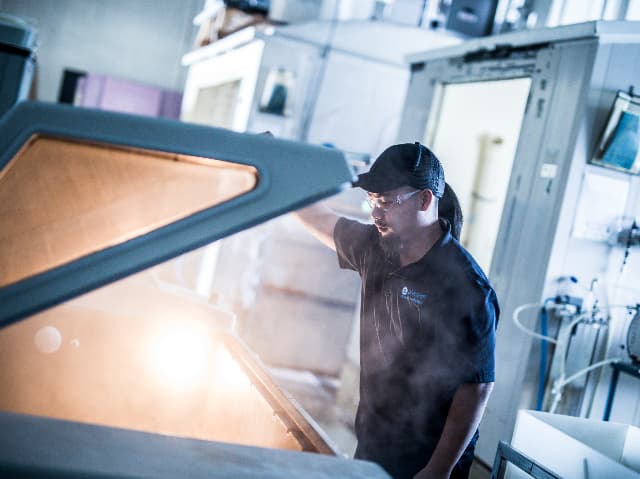
- One of the most advanced flammability laboratories in North America
Standards we test to and Products we test
Whether it’s for hospitality, medical and healthcare, or retail, we can help you to establish compliance with a variety of industry standards, including:
- ASTM Cornell Evaluation
- ASTM D3574 Foam Testing
- ASTM Foundation Impact
- ASTM Hexagonal Roller
- BFD IX-11
- Boston IX-10 & IX-11
- Buyer Specification
- California TB 117, 117-2013
- California TB 121, 129, 133
- Computerized Firmness/ILD
- 16 CFR Part 1633 open flame
- 16 CFR 1632 cigarette
- RESNA/ANSI SS-1 sections 2, 3, 4, 5, 6, 7, and 8 (note section 1 covers vocabulary)
Consumer Products:
- Retail mattresses
- Consumer bedding
- Mattress toppers
Medical/Healthcare - view our Medical Mattress testing page for further information:
- Hospital bed mattresses
- Medical mattresses
- Surgical tables
- Gurneys
Commercial/Institutional:
- Hotel mattresses
- Military mattresses
- Wheelchair cushions
- Pillows
Your Challenges, Our Solutions
Proving Real-World Performance
Meeting Safety & Fire Regulations
Understanding Thermal & Pressure Comfort
Navigating Diverse Market Requirements
Why Choose Element

Advanced Flammability Testing Capability
Comprehensive Testing Solutions
Industry-Leading Accreditations
Expert Support Throughout Process
240 lbhexagonal roller
230 lbloads applied in Cornell test
5minute immersion test
ISO/IEC 17025standards met
Frequently asked questions
What types of thermal performance testing do you offer?
We conduct the Sweating Guarded Hot Plate method to evaluate how well mattresses, mattress toppers and pillows promote heat and moisture flow away from the body. We use Body Analog methods to quantify the temperature and relative humidity within the mattress’ microclimate, helping predict user comfort and prevent tissue breakdown in medical applications.
How do you evaluate mattress durability?
We use a 240 lb, hex-shaped roller called the Hexagonal Roller that moves back and forth across the width of the mattress to simulate typical sleep movement. We also apply the Cornell test, applying a 230 lb cyclic pounding load to the mattress surface to simulate daily activities – from reading in bed to bouncing on it.
What details are included in durability test reports?
We combine Hexagonal Roller and Cornell tests with our proprietary scoring system and include a Compliance Percentage rating comparing performance to industry criteria and norms. This helps you compare performance across any current designs you test as well as future iterations. You will receive detailed measurements of height, firmness and thickness changes, plus any visually apparent degradation.
What does interface pressure mapping involve?
We use state-of-the-art Xsensor® equipment with live subjects to determine body interface pressures. This helps predict product ability to reduce discomfort and promote proper blood circulation, especially valuable for medical and consumer applications.
What types of foam can be tested?
Element tests a wide range of foam materials, including slab, bonded, and molded urethane foams, as well as other flexible cellular materials used in mattresses and bedding products.
What are the different types of mattress performance tests and what do they measure?
The immersion test, based on RESNA/ANSI SS-1, tests how deep a standardized anatomical mannequin sinks in after 5 minutes.
The motion transfer test captures the effect that movement on one side of a mattress has on the adjacent side.
The point elasticity test, based on E DIN SPEC 68200:2016-05, measures how well the surface of a mattress adapts to the irregular shape of the body.
The mattress airflow test, based on ASTM D3574 Part G, tests how easily air passes through a mattress system when a specified level of suction is applied to the mattress surface.

Explore our global network of labs and find your nearest location
VIEW ALL LOCATIONSRelated services

Electrical Safety Testing and Certification Services
Accelerate your electrical product's journey to market with Element's comprehensive Electrical Safety Testing and Certification services. Navigate certification requirements efficiently, reducing time and costs while maintaining rigorous safety standards.

Textile Flammability Testing
Element's textile flammability testing helps ensure compliance with safety standards and flammability requirements to manufacture safer products and reduce risks of burn injuries. Learn more.

Medical Mattress Testing
Element provides best-in-class hospital medical mattress testing to ANSI/RESNA SS-1, with a team of experts on hand to guide you through the whole testing process.
Furniture Testing Services
Our furniture testing services offer peace of mind to manufacturers, ensuring their products are safe, durable, fit for purpose, and compliant with the major furniture testing standards.