
Diesel Engine Exhaust Emissions Testing
Protect your workforce and ensure regulatory compliance with Element's comprehensive Diesel Engine Exhaust Emissions Testing Services. Our accredited laboratories and qualified hygienists deliver precise measurements, expert analysis, and actionable recommendations to help you manage DEEE exposure risks and meet COSHH requirements effectively. Whether you operate train depots, automotive facilities, or warehouses, our testing services provide the data and insights you need to create safer working environments and maintain environmental compliance.
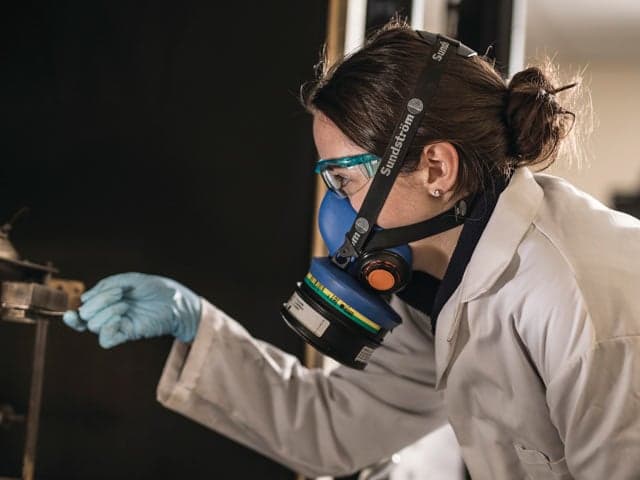
What is Diesel Engine Exhaust Emissions Testing at Element?
Diesel Engine Exhaust Emissions (DEEE) contain many hazardous substances including heavy metals, toxic gases, PAHs, NOx, Particulate/Soot, VOCs, and more. Our testing service measures and assesses the concentrations and composition of Diesel Engine Exhaust Emissions in your workplace environment. Using both active and passive sampling methods, we analyze air quality through personal exposure monitoring and static location testing to identify harmful compounds and provide detailed exposure assessments.
What can Element offer you for Diesel Engine Exhaust Emissions Testing?
Substances we test
Substances we test
At Element, we test for a comprehensive range of harmful substances found in diesel engine exhaust emissions, including heavy metals, toxic gases, PAHs, NOx, particulates/soot, VOCs, carbon dioxide, carbon monoxide, oxides of nitrogen, sulphur dioxide, and other hydrocarbons.
Key tests offered
Key tests offered
Element provides a full range of emissions advisory, testing and training services for your DEEE testing needs:
- Exposure monitoring
- COSSH and DEEE risk assessments
- Evaluation of the existing control measures
- Advice and guidance
Our testing accounts for variations in engine type, condition, fuel specifications, workload, and temperature. This comprehensive approach ensures no potential hazards are overlooked, giving you complete confidence in your workplace safety measures.
Methods and solutions offered
Methods and solutions offered
We employ active sampling using battery-powered pumps for both personal and static location testing. Our methods include filter-based sampling, sorbent tubes, and impinger solutions positioned in breathing zones. We also offer passive sampling options and direct reading calibrated handheld analyzers for immediate results when needed. Each testing approach is tailored to your specific workplace environment and compliance requirements, ensuring you get the most relevant and actionable data.
Which labs offer this service
Which labs offer this service
Testing is available through our UKAS ISO/IEC 17025-accredited laboratories in the UK, with additional US-EPA method testing capabilities at our Singapore facility. Our global presence ensures consistent quality and methodology across all testing locations, making us an ideal partner for organizations with international operations.
Comprehensive reporting
Comprehensive reporting
Our industry-leading reports include executive summaries, site observations, substance toxicities, results comparison with UK Workplace Exposure Limits, discussions, conclusions, and specific recommendations for remedial actions and good industrial practice. Each report undergoes rigorous peer review by experienced team members, ensuring you receive the highest quality insights and recommendations for your specific situation.
Standards we test to and what we test
- UK Workplace Exposure Limits
- US-EPA methods
- COSHH regulations
- Heavy metals
- Toxic gases
- PAHs
- NOx
- Particulate/Soot
- VOCs
- Carbon dioxide
- Carbon monoxide
- Oxides of nitrogen
- Sulphur dioxide
- Other hydrocarbons
Your Challenges, Our Solutions
Meeting Regulatory Compliance Requirements
Managing Workplace Health Risks
Accurate Measurement Needs
Complex Assessment Requirements
Why Choose Element
Accredited Laboratory Excellence
Proven Industry Experience
Qualified Expert Team
Global Testing Capabilities
20+years’ experience
ISO/IEC 17025accredited laboratories
BOHSW501 & W505 qualifications
ISO 9001Quality Management System
Frequently asked questions
What are diesel engine exhaust emissions?
DEEEs vary based on engine type, condition, fuel specification, workload, and temperature. They contain multiple hazardous substances including heavy metals, toxic gases, PAHs, NOx, particulates, VOCs, and other compounds.
How harmful are diesel engine exhaust emissions?
WHO classifies DEEEs as carcinogenic (Group 1). Long-term exposure increases lung and bladder cancer risk, while short-term exposure can cause lung irritations and allergic reactions.

Explore our global network of labs and find your nearest location
VIEW ALL LOCATIONSRelated services
Asbestos Testing Services
Element offers a complete suite of asbestos testing, surveying and sampling services to help you achieve asbestos management compliance in buildings.