
Biological Aerosol & Public Health Air Quality Claims Testing
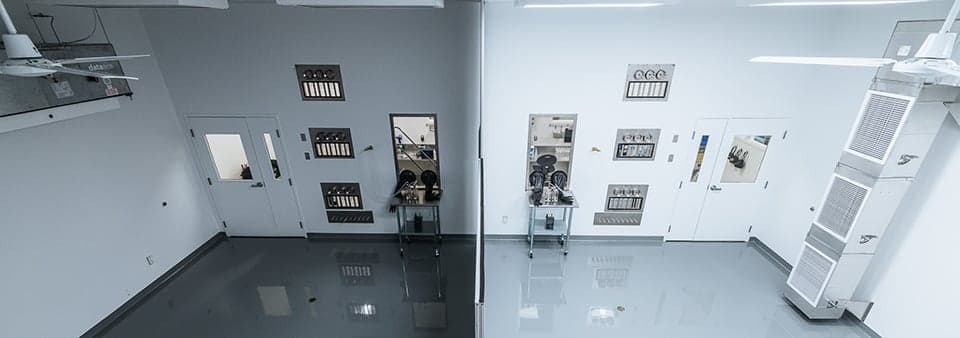
For large-scale indoor air treatment testing, partner with Element to meet consumer and industry demand for air treatments with antimicrobial public health claims. Our industry-leading 214m³ biocontainment laboratory is among the first and largest facilities designed for real-world modeling of aerosolized disinfectants, with comprehensive R&D through GLP-compliant regulatory support.
What is Biological Aerosol & Public Health Air Quality Claims Testing at Element?
It is now possible to evaluate the efficacy of aerosolized products intended to reduce or eliminate indoor airborne organisms in large indoor spaces such as arenas, hospitals, schools, transportation, and more. Unlike traditional microbiology test methods, Element’s 214 cubic meter biocontainment laboratory allows for simultaneous testing of a control and treated space. Various size configurations of, but not limited to, 107m³ and 214m³ can be accommodated, in addition to multiple air handling scenarios, including recirculation and the introduction of fresh air.
What can Element offer you for Biological Aerosol & Public Health Air Quality Claims Testing?
Products we test
Products we test
Element tests a wide range of air treatment and disinfection products. Our facility accommodates testing for both airborne organisms and surface contamination in large indoor spaces such as hospitals, schools, arenas, and transportation facilities.
Key tests offered
Key tests offered
Our air treatment and related testing services for antimicrobial and antiviral products cover a number of bacteria and viruses, which can be tested in Element’s large BSL-2 testing facility, including SARS-CoV-2-like organisms. Complete our request form to get in touch with a scientist to explore available organisms. Common tests include, but are not limited to:
- Bioaerosol testing for air sanitization and air disinfection claims following EPA guidance
- Bioaerosol testing for virucidal claims in air
- Biological aerosol testing for removal of organisms in air
- Bioaerosol testing against bacteria, phage, mammalian viruses, and fungi
- Detailed chemical analysis of air samples including active ingredient detection
- Research and development (R&D) level testing
- Good Laboratory Practices (GLP) compliant testing for regulatory submissions
- Testing that incorporates air exchanges during testing
- Custom testing against other air quality aerosols
- Testing antimicrobial devices against bioaerosols (air filters, UVC devices, in-duct products, etc.)
- Fogging and misting tests against airborne organisms
- Fogging and misting tests against organisms on surfaces
Methods and solutions offered
Methods and solutions offered
Element employs industry-leading methodologies for real-world modeling of indoor air treatment efficacy. Our testing protocols align with EPA requirements and include customizable approaches for various application methods, exposure times, and environmental conditions.
Virucidal fogging and misting device test methods: Element offers best-in-class virucidal efficacy testing of fogging and misting devices according to the following established methodology. Custom protocols can also be developed to meet your unique needs.
- Virucidal Efficacy of a Disinfectant Applied to a Room via a Fogger or Misting Device
An aliquot of the test virus is inoculated onto the surface of a glass Petri dish (used as the test “carrier”) and the virus is dried. The inoculated carriers are placed at diverse locations within the sealed room and exposed to the test substance for a specified exposure time. Following exposure, the carriers are neutralized, and serial dilutions of the neutralized test substance are performed. The dilutions are then assayed for viral infectivity by an assay method specific for the test virus. Appropriate virus, test substance cytotoxicity, and neutralization controls are run concurrently.
The EPA requires at least a 3-log reduction of the virus in order to claim efficacy. Connect with an expert today to explore a partnership with Element for virucidal efficacy testing of fogging and/or misting devices.
- Microbiology fogging and misting device test methods:
Element offers industry-leading microbiology testing of fogging and misting devices to established methods. Contact us today to explore the development of custom protocols to meet your needs.
- Efficacy of a Disinfectant Applied to a Room via a Fogging, Misting or Vaporizing Device for Disinfection (bactericidal/fungicidal/tuberculocidal)
The purpose of this assay is to evaluate the efficacy of a room disinfection system applied by a fogging, misting or vaporizing device for disinfection on hard, non-porous surfaces. Inoculated glass carriers and appropriate chemical indicators or active ingredient detection probes are placed at diverse locations within the sealed room. The inoculated carriers and indicators/detection probes will be exposed to the test substance for a specified exposure time. After exposure, the carriers are transferred to vessels containing neutralizing subculture media and assayed for survivors. Appropriate culture purity, sterility, viability, initial population, carrier population, non-active treatment and neutralization confirmation controls are performed.
- Efficacy of a Sterilant Applied to a Room Via a Fogger or Misting Device
This assay determines the efficacy of a room bio-decontamination system on exposed, hard, non-porous surfaces, using a sterilant applied by a fogger or misting device in a sealed large volume enclosure. In this method, a series of glass or stainless steel surfaces inoculated with the test organism (commonly Geobacillus stearothermophilus, Clostridium difficile, Staphylococcus aureus or Pseudomonas aeruginosa) are placed at specific locations inside a customized testing room. The room is sealed, the fogging, misting or vaporizing product is allowed to treat the room and following treatment, the surfaces are removed and evaluated for survivors. Based on the desired claim and the requirements of the regulatory agency, the product must demonstrate kill on a predetermined number of carriers inoculated with test organisms applicable to the claim. The EPA typically requires the testing of 3 independent lots of test substance, one of which must have aged ≥ 60 days at the time of testing, to substantiate efficacy claims. Inoculated stainless steel carriers (biological indicators) and appropriate chemical indicators (CI), if applicable, are placed at diverse locations within the sealed room. The inoculated carriers and CIs will be exposed to the test substance for a specified exposure time. After exposure, the carriers are transferred to vessels containing neutralizing subculture media and assayed for survivors. The CIs, if used, will be visually examined and observations will be recorded.
- Efficacy of a Sanitizer Applied to a Room via a Fogging, Misting or Vaporizing Device for Non-Food Contact Sanitization
The purpose of this assay is to evaluate the efficacy of a room sanitization system applied by a fogging, misting or vaporizing device for non-food contact sanitization on hard, non-porous surfaces. Inoculated glass carriers and appropriate chemical indicators or active ingredient detection probes are placed at diverse locations within the sealed room. The inoculated carriers and indicators/detection probes will be exposed to the test substance for a specified exposure time. After exposure, the carriers are transferred to vessels containing neutralizing subculture media and assayed for survivors. Appropriate culture purity, sterility, initial population, carrier population, non-active treatment and neutralization confirmation controls are performed.
- Efficacy of a Sanitizer Applied to a Room via a Fogging, Misting or Vaporizing Device for Food Contact Sanitization
The purpose of this assay is to evaluate the efficacy of a room sanitization system applied by a fogging, misting or vaporizing device for food contact sanitization on hard, non-porous surfaces. For fogging or misting bio-decontamination devices which utilize a sanitizer, efficacy testing is performed to determine that all exposed, hard, non-porous surfaces within the enclosure are effectively sanitized. Inoculated glass carriers and appropriate chemical indicators or active ingredient detection probes are placed at diverse locations within the sealed room. The inoculated carriers and indicators/detection probes will be exposed to the test substance for a specified exposure time. After exposure, the carriers are transferred to vessels containing neutralizing subculture media and assayed for survivors. Appropriate culture purity, sterility, viability, initial population, carrier population, non-active treatment and neutralization confirmation controls are performed.
Cutting-edge equipment we use
Cutting-edge equipment we use
Our purpose-built biocontainment laboratory features specialized equipment for comprehensive aerosol testing including advanced air sampling devices, controlled aerosol delivery systems, and high-precision detection instruments. Our facility's integrated monitoring systems ensure precise environmental control throughout testing, while our analytical equipment enables detailed chemical analysis of air samples and active ingredient detection.
Which labs offer this service
Which labs offer this service
Our team operates from Life Sciences hubs across the world, providing global access to our expert capabilities. Find your nearest Life Sciences hub on our Locations Page.
Industry-leading testing environment
Our state-of-the-art 214 cubic meter biocontainment laboratory is among the first and largest facilities designed specifically for real-world modeling of aerosolized treatments. The BSL-2 facility enables testing of SARS-CoV-2-like organisms and provides flexible space configurations to accommodate various testing scenarios.
- 214m³ biocontainment laboratory
- BSL-2 facility capabilities
- Flexible space configurations
- Multiple air handling scenarios
- Real-world modeling capability
Standards we test to and products we test
Achieve public health air quality claims for indoor spaces. Evaluate product performance with purposefully designed R&D protocols before engaging in GLP -compliant testing. Our testing protocols align with current EPA guidance for the efficacy of air treatments for public health claims, ensuring your products meet all regulatory requirements for market approval.
- Aerosolized disinfectant and sanitation products in indoor spaces.
- Air filtration systems and UVC devices
- In-duct treatment products
- Fogging and misting devices
- Surface disinfection systems
Your Challenges, Our Solutions

Meeting Complex EPA Requirements
Limited Real-World Testing Options
Accelerating Market Entry
Managing Technical Complexity
Why Choose Element

First Large-Scale Testing Facility
Simultaneous Control Testing
Complete Regulatory Support
Customizable Testing Solutions
214m³industry-leading biocontainment laboratory
2+testing configurations available
3-logminimum reduction required
BSL-2advanced containment facility
Frequently asked questions
What types of organisms can be tested in your biological aerosol facility?
Our facility can test a wide range of organisms including bacteria, phage, mammalian viruses, and fungi. For testing with SARS-CoV-2-like organisms, our BSL-2 facility provides the necessary containment capabilities.
How many independent product lots are required for EPA registration testing?
The EPA typically requires testing of 3 independent lots of test substance, with one lot aged ≥ 60 days at the time of testing, to substantiate efficacy claims for regulatory submissions.
Can you test product efficacy with air exchanges occurring during treatment?
Yes, our testing protocols can incorporate air exchanges during testing to simulate real-world conditions where fresh air is introduced or air is recirculated through HVAC systems.
Can Element help with both R&D testing and final regulatory submissions?
Yes, we offer a complete testing pathway from initial R&D validation through GLP-compliant regulatory testing, helping you optimize your product before investing in the more extensive testing required for EPA submissions.

Explore our global network of labs and find your nearest location
VIEW ALL LOCATIONSRelated services
Virology Testing
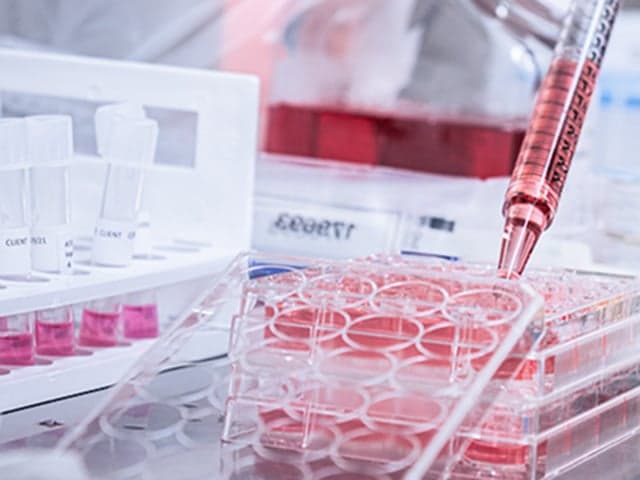
Element delivers GLP-compliant virology testing for antimicrobial products, helping companies meet global regulations, validate claims, and accelerate time to market with expert-led, reliable data.
Antimicrobial Microbiology Testing Services
Element's knowledgeable microbiologists can test to multiple established methods, as well as developing custom protocols.