
Why ESS Systems Pass Component Tests and Still Fail in the Field
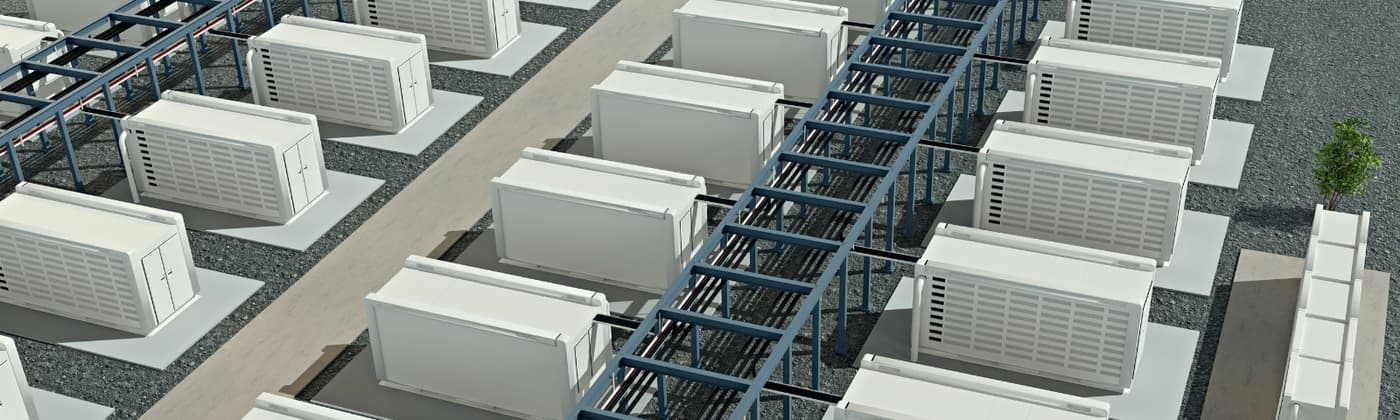
Certified components do not guarantee a certifiable system. In this guide, Mike Pendleton (Technical Director, Battery) draws on patterns observed across ESS programs at Element to explain where testing gaps emerge from AHJ permitting failures to system-level integration faults and what a robust energy storage system testing program actually requires.
According to the U.S. Energy Information Administration, U.S. developers added 15 GW of utility-scale battery storage to the grid in 2025, a record at the time, and are on track to add 24 GW in 2026. Behind each of those deployments is a testing and certification program that determines whether the system is safe to install, grid-ready, and built to last. For engineers and compliance managers working on energy storage projects, understanding what ESS testing actually covers, and where programs commonly leave gaps, is the starting point for any credible certification strategy.
Why Component Testing Does Not Tell the Full Story
A battery cell that passes its qualification tests can still contribute to a system-level failure. Control boards corrode. Enclosures leak under sustained humidity. Insulation resistance degrades across thermal cycles. Communication faults between the battery management system and EMS software can escalate into uncontrolled shutdowns.
Battery failure analysis exists precisely because field failures rarely originate where manufacturers expect them to. Component-level testing confirms that individual parts meet their specifications. It does not confirm that the integrated system will behave safely under real operating conditions.
In our experience, one of the most common assumptions manufacturers make is that certified components will automatically translate into a certifiable system. In reality, many integration issues only emerge once batteries, inverters, controls, and software begin operating together as a unit. These interactions are often where certification programs uncover unexpected risks.
System-level ESS certification testing evaluates the complete assembly as it will be installed and operated. That includes grid interconnection behaviour, communication protocol handshakes, redundancy responses, and microgrid compatibility. For utility-scale and commercial installations, this is the validation layer that determines whether the system is deployable, not just compliant on paper.
Performance Testing
Performance testing establishes how an ESS delivers and stores energy across its service life. Battery performance testing covers the following core parameters:
- Capacity and energy output verification against rated specifications
- Cycle life testing across charge and discharge profiles
- Depth of discharge performance at varying load levels
- Rate capability and load response under transient demand
- Temperature performance across the full operating range
- Degradation and ageing behaviour over extended cycling
The data from these tests feeds directly into warranty modelling, field reliability projections, and procurement decisions by utilities and project developers. A gap in this data is a commercial risk as much as a technical one. Utilities evaluating storage assets want cycle-life data across realistic depth-of-discharge profiles, not just peak capacity figures from controlled lab conditions.
Safety Testing
Battery safety testing evaluates how an ESS responds under fault conditions and whether its protection systems function as designed. For grid-scale systems, the stakes are higher than for consumer products because a single failure can cascade across modules, racks, and in some cases, adjacent enclosures.
Key evaluations include:
- Overcharge, overdischarge, and short circuit testing
- Thermal runaway propagation testing across cell, module, and system levels
- Nail penetration and crush tests at the cell level to simulate internal short circuit events
- External fire exposure testing
- Drop, seismic, and mechanical shock testing
- Venting, gas release, and pressure relief validation
- Electrical isolation and grounding integrity
Nail penetration testing deserves specific attention in an ESS context. It induces a controlled internal short circuit to measure how heat and gas propagate from a single cell outward. The results inform separator design, module spacing, and the adequacy of thermal barriers between cells, data that standard electrical safety tests do not produce.
Environmental and Reliability Testing
An ESS installed at a solar-plus-storage facility in Arizona faces a different set of stressors than one deployed at a wind farm in Scotland. Environmental and reliability testing measure how a system performs when exposed to the conditions it will actually encounter across its service life. Core evaluations include:
- Temperature cycling and humidity testing
- Salt spray and corrosion resistance testing
- Altitude and vibration testing
- Dust and water ingress protection to the relevant IP rating
- Mechanical impact and enclosure integrity testing
Corrosion is a common failure driver that gets less attention than thermal events. In coastal or humid environments, untreated enclosure joints, connector housings, and cable entry points can allow moisture ingress that degrades insulation resistance gradually and without obvious warning signs until a fault occurs.
Electrical and Functional Safety Testing
Electrical safety testing ensures that an ESS operates within safe electrical limits and responds predictably during abnormal conditions. This category covers:
- Dielectric withstand voltage (HiPot) testing
- Insulation resistance testing
- Ground bond testing
- Fault tolerance and failure mode analysis
Functional safety testing under ISO 26262 or IEC 61508 frameworks is increasingly relevant for ESS platforms that include software-defined battery management systems. A BMS that misreads cell state-of-charge under high temperature conditions, or that fails to trigger a shutdown during an overvoltage event, is a functional safety failure as much as an electrical one.
Fire and Hazard Mitigation Testing
Fire testing for energy storage systems focuses on containment and propagation, specifically whether a thermal event in one part of the system can be prevented from reaching adjacent equipment or infrastructure.
UL 9540A is the primary standard for fire propagation testing in ESS applications. It is conducted at four levels: cell, module, unit, and installation. The installation-level test is the most operationally relevant because it evaluates how a full containerised or rack-based system behaves during a fire event, including gas release, flame spread, and whether the ventilation and suppression systems perform as specified.
We frequently see developers arrive at the permitting stage with strong unit-level test data, but insufficient installation-level evidence. While the product itself may be compliant, authoritative bodies are increasingly focused on how the complete system behaves within its intended environment, making installation-level validation a critical part of project approval.
Additional fire and hazard evaluations include:
- Ventilation and exhaust system validation
- Flame spread and smoke release testing
- Emergency shutdown and electrical isolation verification
AHJs and fire marshals reviewing installation permits increasingly require UL 9540A test reports at the installation level, not just the unit level. Submitting a unit-level report for a project that requires installation-level data is a common cause of permitting delays.
Certification Standards and Regulatory Compliance
ESS compliance is built across a framework of international standards covering product safety, installation requirements, electrical performance, and transportation. The most commonly referenced standards are:
- UL 9540 and UL 9540A (system safety and fire propagation)
- UL 1973 (battery systems for stationary applications)
- UL 1741 (inverters and grid interconnection)
- IEC 62619 (safety for secondary lithium cells and batteries in stationary applications)
- IEC 62933 (electrical energy storage systems)
- IEEE 1547 (grid interconnection and interoperability)
- NFPA 855 (installation standard for stationary energy storage systems)
- NFPA 70 / NEC (electrical installation requirements)
- UN 38.3 (transportation testing for lithium batteries)
- CE Marking (European market access)
- ISO 26262 (functional safety for software-defined systems)
One distinction worth understanding: UL 9540 certifies the ESS product. UL 9540A is a test method, not a certification standard. A system can carry UL 9540 certification while having completed UL 9540A fire propagation testing as part of the evidence package. AHJs typically require the UL 9540A test data separately as part of the permit application.
NFPA 855 sets specific siting, separation, and suppression requirements for ESS installations and is referenced by most AHJs in the United States. It directly affects how systems are positioned relative to buildings, property lines, and other equipment, and is a common compliance gap for manufacturers who focus exclusively on product certification without reviewing installation requirements early in the design process.
Coordinating certifications across regions, particularly UN 38.3 for transport and CE Marking for European deployment, is most efficiently handled as part of the initial test plan rather than after domestic certification is complete.
Documentation and Quality Assurance
Every certified ESS requires documentation that supports accountability and traceability throughout the certification process. Bill of materials records, design validation data, quality control reports, and third-party test reports all form part of the evidence package that regulators, utilities, and AHJs will review.
We’ve seen a recurring challenge during certification reviews is incomplete, inconsistent documentation between testing phases. Even when testing has been successfully completed, gaps in traceability or supporting records can delay approvals and impact project schedules.
This documentation matters beyond the certification process itself. When a field issue occurs, the quality of your records determines how quickly a root cause can be identified and whether the findings can be used to support a corrective action that satisfies both regulators and customers.
Frequently Asked Questions
What is the difference between UL 9540 and UL 9540A?
UL 9540 is a product safety standard for energy storage systems. UL 9540A is a fire propagation test method used to generate data that supports UL 9540 certification and AHJ permit applications. They serve different functions, and completing UL 9540A testing does not by itself constitute UL 9540 certification.
Does an ESS need to be retested if the battery cells are changed?
Generally, yes, if the cell change affects the system’s safety or performance characteristics. Most certification bodies and standards require that design changes to a certified product be evaluated to determine whether the change is significant enough to require partial or full retesting. A change in cell chemistry, cell format, or cell supplier typically triggers a retesting requirement.
How does NFPA 855 affect ESS installation design?
NFPA 855 sets maximum energy capacity thresholds, siting distances from occupied buildings and property lines, and requirements for fire suppression and ventilation at the installation level. It directly affects where a system can be placed and what suppression infrastructure must be in place before an AHJ will approve installation. Manufacturers who do not review NFPA 855 requirements until the permitting stage often find they need to redesign the installation layout.
What documentation does an AHJ typically require for a utility-scale ESS installation?
AHJs commonly require a UL 9540 certification listing, UL 9540A fire propagation test data at the installation level, a site plan demonstrating compliance with NFPA 855 separation requirements, electrical schematics, and a commissioning and emergency response plan. Requirements vary by jurisdiction, so early engagement with the local AHJ is advisable.
Can a system pass component-level certification but fail system-level integration testing?
Yes. Component-level certifications validate individual parts against their specifications. System-level integration testing evaluates the assembled system under operating conditions and can reveal failure modes that only emerge when components interact, particularly communication failures between the BMS, EMS, and inverter.
What This Means for Your ESS Program
Effective ESS testing is not a single event. It is a sequence of validation decisions that starts at the cell level and ends with a fully integrated system operating under the conditions it will face in the field. Each testing category, performance, safety, environmental, electrical, and fire, answers a specific set of questions about risk. Skipping or under-specifying any one of them creates a gap that will surface either during certification or after deployment.
The standards framework, UL 9540, IEC 62619, NFPA 855, IEEE 1547, and the rest, provides the compliance structure. But the test program you build around those standards determines whether your system is genuinely ready for deployment. Understanding what each test measures, and why it matters beyond the checkbox, is what separates a certification program that holds up in the field from one that passes on paper.
Work With Element
Element provides battery safety testing, performance validation, and certification support for energy storage systems across cell, module, and system levels. Testing is aligned to UL, IEC, IEEE, and NFPA standards, with capabilities covering fire propagation, electrical safety, environmental durability, and grid interconnection. To discuss your ESS testing program, contact Element’s battery testing team.
By Engaged Expert

Related Industries

Related Services

Battery Safety and Abuse Testing
Element delivers advanced battery safety and abuse testing for various chemistries and formats, helping identify risks, support certification, and meet global standards across diverse industries and applications.

Battery Failure Analysis
Element's comprehensive cell and battery failure analysis identifies failure modes and the root cause of product failure, providing the insights you need to design superior products.
Battery Failure Analysis
Element's comprehensive cell and battery failure analysis identifies failure modes and the root cause of product failure, providing the insights you need to design superior products.

AI & Data Center Infrastructure Testing and Validation
Element's 20+ US labs deliver integrated AI and data center testing - NEBS, EMC, IoT, wireless, materials, cables, battery and cooling - across the full infrastructure lifecycle.