
Understanding the latest EN 14181 flow requirements

In this article, Element expert James Eldridge breaks down critical 2024 revisions to EN 14181 flow requirements mandating pre-investigation tests for CEMS installations. This guide reveals how proper flow variability assessment determines whether operators can reduce QAL2 testing from 15 to just 9 measurements, saving significant time.
Following the revision to the Environment Agency’s MID for EN 16911-2 released at the beginning of 2024, there are a number of mandatory requirements that we need to adopt when performing QAL2 and AST testing for Volumetric Flow Rate and Velocity as per the stipulations of EN 14181.
What revisions have been made?
The first major change required is a highly recommended one-off ‘pre-investigation’ test for all newly installed CEMS. This is also recommended for existing CEMS. The pre-investigation test aims to determine whether the installed CEMS is suitable for the profile encountered at the sampling plane at varying flow rates, and the outcome of this test dictates which type of QAL2/AST is to be performed. The two types of QAL2/AST calibration are:
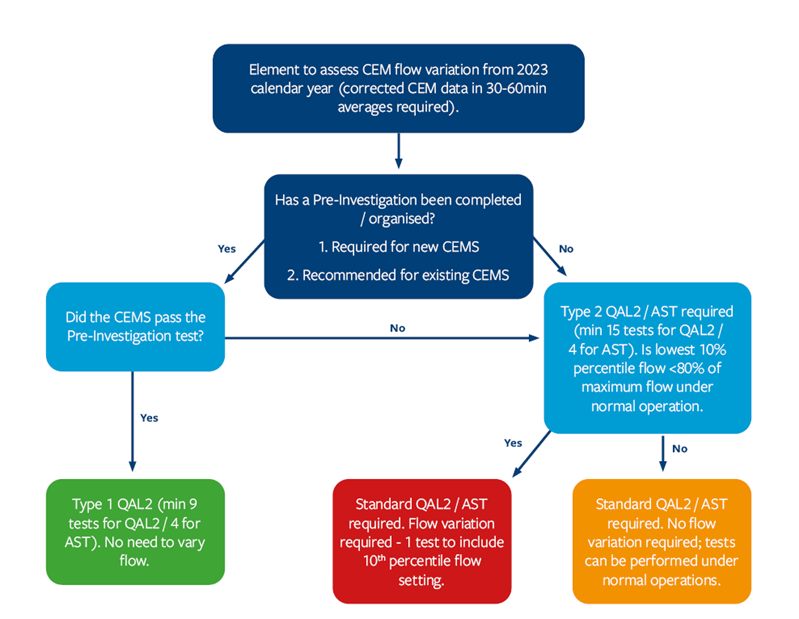
- Pre-Investigation outcome is a Pass: This allows for a Type 1 QAL2 / AST – this is a reduced test QAL2, whereby the minimum number of paired tests performed can reduce from a minimum of 15 to 9 (4 for an AST). There is no need for the operator to vary the flow profile over the course of the QAL2 or AST.
- Pre-Investigation outcome is a Fail or has not been completed: This requires a Type 2 QAL2 / AST, which involves a minimum of 15 paired measurements (5 for an AST). The Type 2 QAL2 is split into different test routes, following an assessment of the flow variability during normal operation over the last calendar year.
Notes:
If the lowest 10th percentile flow is determined to be >80% of the maximum flow, then the flow profile does not need to be altered by the operator during the QAL2 tests.
If the lowest 10th percentile flow is determined to be <80% of the maximum flow, then the operator must provide their testing partner with low flow conditions so a single test can be achieved at these conditions, before returning the flow to normal, as part of the QAL2 tests.
How to perform revised EN 14181 flow assessments
In order for an assessment of the varying flow over the last calendar year to be performed, contact your testing partner about submitting your CEMS data. This data should include the following:
- Time and date
- Volume Flow Rate value (corrected conditions)
- A tag or column highlights if the corresponding measurement is considered valid data (valid would be for example the plant operating normally / or is invalid due to start up or shut down / plant off or in maintenance cycle).
Upon receipt of the data, your testing partner will remove all invalid data, determine how varied your flow is over the normal operation, and then advise on what steps to take during your EN 14181 flow assessment.
The decision process for EN 14181
The flow chart below demonstrates the decision process regarding EN 14181 flow assessments.
Summary of revisions and next steps
The recent revision to the Environment Agency’s MID for EN 16911-2, released in early 2024, brings significant changes to QAL2 and AST testing for Volumetric Flow Rate and Velocity under EN 14181. Collaboration with testing partners to assess flow variability over the past year is essential for EN 14181 flow assessment. These revisions highlight the importance of thorough testing and data analysis for reliable emissions monitoring systems.
Should you have any queries with the above information please contact our team or James Eldridge directly for clarification.
By Engaged Expert

Related Industries
Related Services
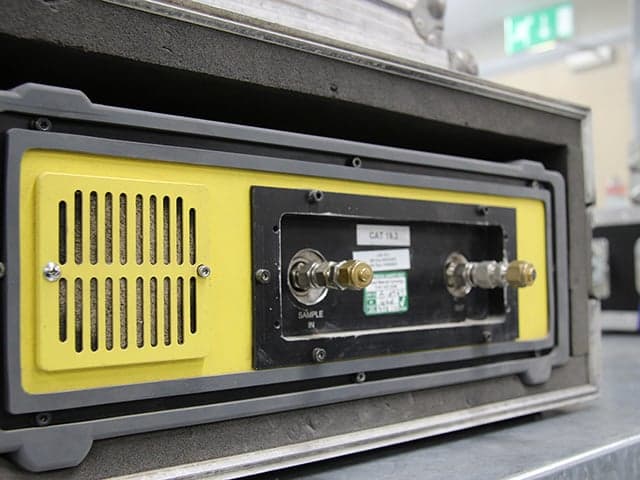
CEMS Emissions Monitoring and Calibration
Element's CEMS , calibration and temporary CEMS services provide rapid-response solutions . EN 14181 calibration experts, MCERTS accreditation, 60+ systems, and local expertise, for operational continuity and environmental permit adherence.
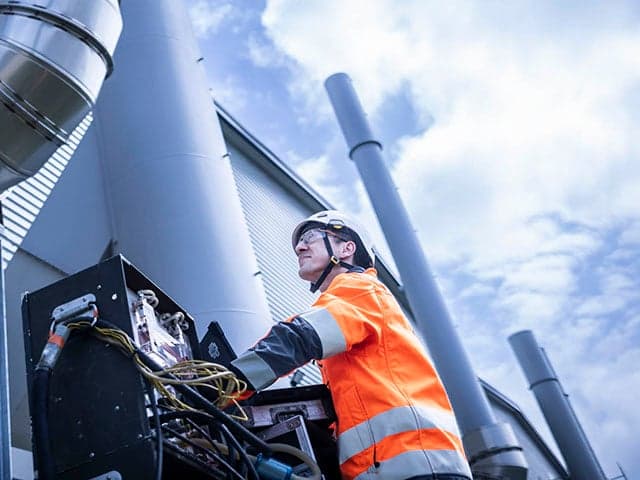
Stack Emissions Testing and Monitoring Services
Element's Stack Emissions Testing and Monitoring Services deliver precise, accredited testing for compliance across multiple industries. With expert teams, advanced technology, and comprehensive solutions, we help ensure environmental standards are met efficiently, minimizing operational disruptions and simplifying data management.
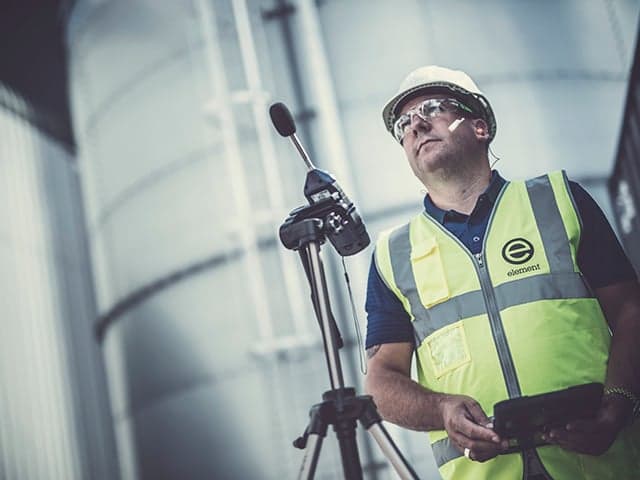
Environmental Impact Assessments Services
Element's Environmental Impact Assessments provide air, noise, and vibration studies to meet planning and regulatory needs. Backed by advanced modeling and independent verification, we deliver accurate results to protect communities, ensure compliance, and streamline your project planning.

Environmental Testing Services
Our experts and network of accredited laboratories offer environmental testing services for water, soil, sediments, waste, air quality, emissions and more. Learn More.
Siloxane Monitoring Services
Element's siloxane monitoring services offer accurate GC/MS testing for biogas and landfill gas, helping protect engines, optimize maintenance, and ensure efficient operations. With UKAS accreditation and ISO-certified labs, we deliver reliable results and expert recommendations to prevent costly damage and unplanned downtime.
Biogenic Carbon Emissions Monitoring services
Element offers OFGEM-approved biogenic carbon emissions measurement services to determine the renewable energy content of waste-derived fuels combusted at energy-from-waste plants.