
Welding Fume Safety - Everything You Need To Know
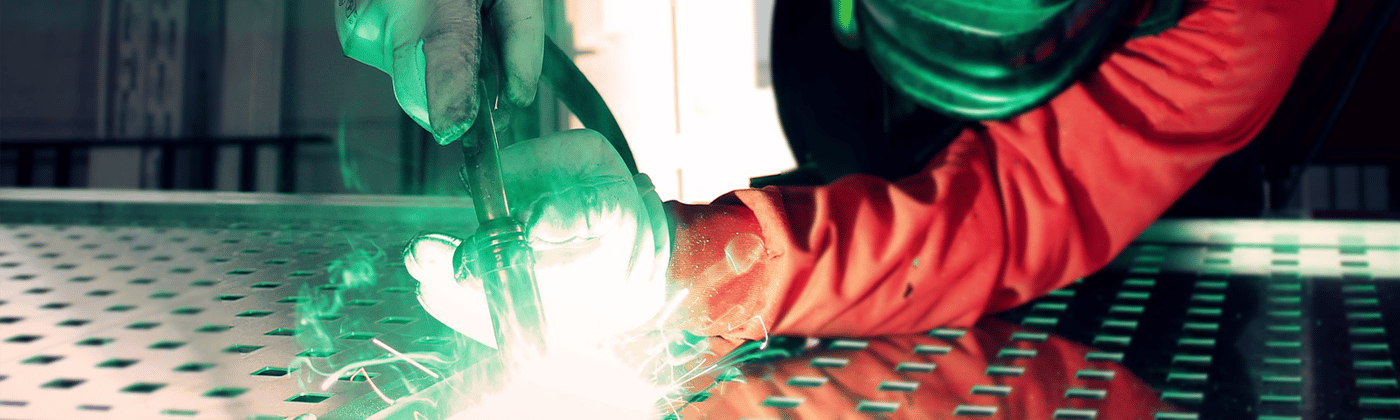
This article by Parmjit Gahir of Element Materials Technology explains the hazards of welding-fume exposures, reviews UK legislation (including Control of Substances Hazardous to Health (COSHH)), and outlines how to assess, monitor and control fume risks in industrial inspection, testing and certification settings.
Welding fume safety legislation
UK legislation states that all workers must be protected from hazardous airborne substances. The Control of Substances Hazardous to Health (COSHH) regulations set out clear rules for employers to provide a safe working environment including welding fume safety.
What are welding fumes?
Fumes and particles produced by welding activities; a complex mix of airborne gases including Nitrous Oxide, Ozone, metals, and fine particles.
The dangers of welding fumes
Welding fumes are very hazardous and classified as a known carcinogen. Workers who are exposed are at risk of developing occupational asthma, cancer, irritation of the breathing airways, metal fume fever, and pneumonia, amongst others.
Welding fume risk assessment
A critical part of any risk assessment is the identification and accurate assessment of the level of risk of exposure. This is based on:
-
The toxicity of the substances
-
The concentrations involved
-
The duration of exposure
Welding fume exposure monitoring
There is no single Workplace Exposure Limit (WEL) for welding fume. The HSE document EH40 defines the WELs for various metal oxide compounds and gases which can be frequently found in welding fume:
|
Substance |
WEL |
|
Aluminium |
10 mg/m3 |
|
Chromium |
0.5 mg/m3 |
|
Iron |
5 mg/m3 10 mg/m3 STEL |
|
Manganese - Inhalable Fraction - Respirable Fraction |
0.05 mg/m3 |
|
Titanium |
10 mg/m3 |
|
Nitrogen Oxide |
2.5 mg/m3 |
| Nitrogen Dioxide |
0.955 mg/m3 |
| Copper | 0.2 mg/m3 |
| Nickel |
0.1 mg/m3 |
| Ozone | 0.4 mg/m3 STEL |
| Chromium VI (process generated) | 0.025 mg/m3 |
The WELs are based on an average 8-Hour Time Weighted Average of exposure. In the case of workers carrying out welding, it is possible that they are exposed to a short-term moderately high concentration but when averaged over an 8-hour shift the exposure is low.
Some substances have Short Term Exposure Limits (STEL) where concentrations must not exceed the limit over a 15-minute period.
Welding fume safety
The legal limits are clearly defined by the WELs and STELs and should not be exceeded , due to the classification of all welding fume being carcinogenic exposure should be reduced to as low as reasonably practicable (ALARP).
A COSHH Risk Assessment should define the frequency and program for any workplace exposure monitoring.
Generally speaking, six samples should be taken within a similarly exposed group (SEG).
Regular monitoring should be conducted and the frequency should be based on the risk assessment taking into account:
- The Welding technique used (TIG, MIG, MMA, etc.)
- Frequency and duration of activity
- Historical years exposure monitoring data
- Engineering controls in place and efficacy of measures
It is important to note that when exposure monitoring is conducted on a given day that the operating conditions and workload should represent typical activities. For example, annual monitoring should be typical of conditions over that year as far as practicable. If significant changes or modifications are made then exposure monitoring should be conducted as soon as possible to assess the changes.
Welding fume extractors and other control measures
Due to the serious and harmful nature of welding fumes, all Indoor welding activities require engineering controls which are typically in the form of Local Exhaust Ventilation (LEV).
LEV systems alone often cannot adequately control exposure and so suitable Respiratory Protective Equipment (RPE) is employed to protect workers further.
Outdoor welding also requires adequate RPE. It is crucial that workers are trained in the correct use of RPE and PPE. We are able to offer Face Fit Testing for regulatory compliance.
- Use engineering measures to control welding fumes e.g. LEV
- Adequate RPE should also be employed to provide further protection from remaining fumes
- LEVs should be correctly operated and maintained with a Thorough Examination and Test every 14 months in accordance with HSG 258
- RPE should be adequately maintained and training provided on the correct use
Contact Element for expert advice
Contact Element today to discuss Welding Fume Exposure Monitoring with our friendly experts.
Our Occupational Hygiene team has a wealth of experience and we can support you with a range of services including:
By Engaged Expert

Related Industries
Related Services
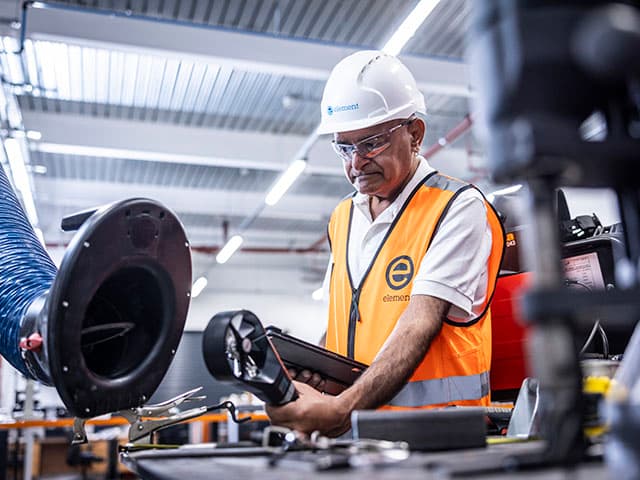
Welding Fume Exposure Monitoring Services
Element's welding fume exposure monitoring service helps protect your workforce and ensure HSE compliance. We provide comprehensive air quality assessments, including fume analysis and LEV testing, to identify and control exposure risks. Our expert team delivers tailored solutions, including risk assessments and training, to create a safe and compliant welding environment.
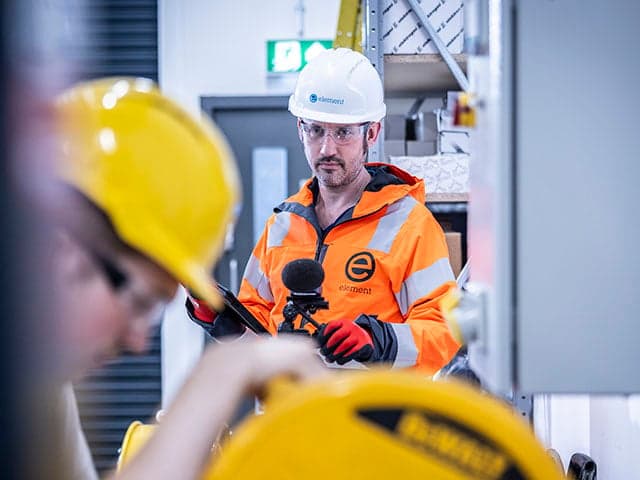
Occupational Hygiene Services
Element provides a comprehensive range of occupational hygiene services to help protect health of your employers in the workplace and comply with the law.
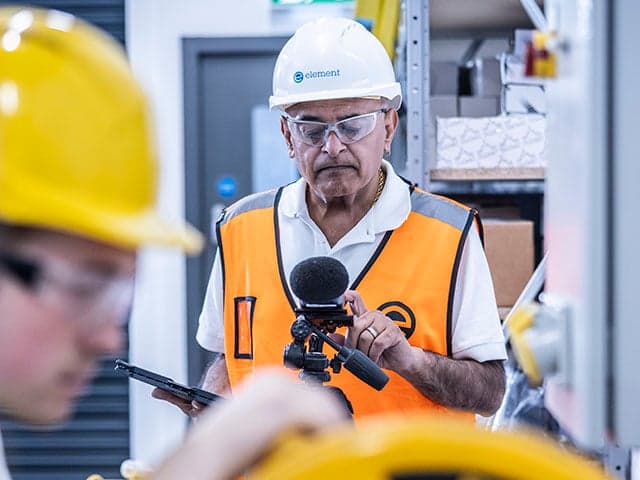
COSHH Risk Assessment & Regulations
Occupational hygiene experts at Element provide COSHH Risk Assessments to assess the risk to employees, helping you to comply with COSHH regulations.