
Lithium-Ion Battery Market Trends: Prismatic Cells, Sodium-Ion Growth, and the Rise of Safety Testing
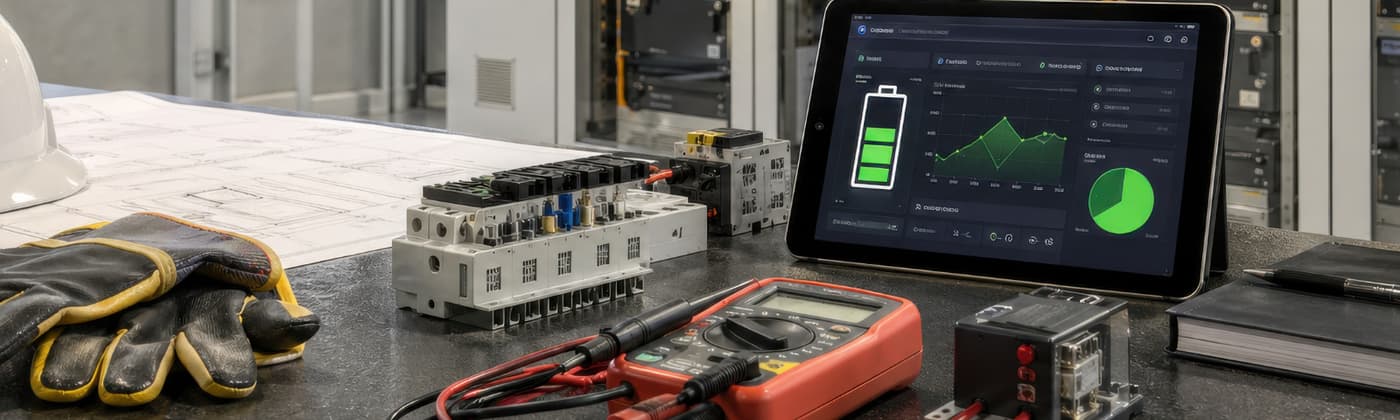
Lithium-ion battery market trends in 2024 show prismatic cells displacing pouch as the dominant format, sodium-ion moving from experimental to mainstream in laboratory volumes, and safety testing growing faster than performance testing. This whitepaper by Global Technical Director of Mobility, Mike Pendleton, presents Element's year-in-review analysis across its Boston and Atlanta laboratories, covering shifts in form factor, chemistry, test type, and the industries driving demand for independent validation.
Executive Summary
Testing data captures more than performance. It reflects the commercial pressures, engineering priorities, and risk concerns that manufacturers are responding to in real time. When test volumes shift, it is because the industry has shifted first. Element's year-in-review analysis draws on 2024 testing data across its Boston, Massachusetts and Atlanta, Georgia laboratories. The data covers form factor distribution, chemistry breakdown, test type volume, and industry representation across thousands of individual test programs.
Four findings emerge consistently across both facilities. Prismatic cells have displaced pouch cells as the dominant format, driven by the volumetric efficiency and mechanical containment requirements of large-format EV and ESS applications. Sodium-ion has moved from a niche chemistry to nearly one in five tests at the Boston laboratory, reflecting genuine commercial momentum rather than speculative interest. Safety testing, specifically thermal propagation and failure analysis, is growing as a share of overall test volume, indicating that manufacturers are treating fire risk and failure prevention as development priorities rather than end-of-line checks. Independent validation is expanding beyond automotive and energy storage into medical devices, consumer electronics, and manufacturing, a trend that reflects the broadening of electrification across sectors where safety and compliance are non-negotiable.
These findings have direct implications for how manufacturers design test programs, sequence compliance activities, and plan for chemistry transitions. This report presents the data behind each finding and translates it into recommendations for battery engineers, compliance managers, and product development leads.
About This Report
The data in this whitepaper is drawn from Element's internal year-in-review analysis of testing volumes across its Boston and Atlanta laboratories for the calendar year 2024. Both facilities operate as independent third-party testing laboratories serving manufacturers across automotive, energy storage, consumer electronics, medical device, and battery technology sectors.
Form factor data reflects the distribution of cell formats submitted for testing. Chemistry data reflects the distribution of cell chemistries across test programs. Test type data reflects the volume of individual test categories requested. Industry data reflects the sector classification of customers submitting programs across both facilities. All figures are drawn from Element's internal laboratory records. Where Boston and Atlanta data differ, both are reported separately, as the two facilities serve overlapping but distinct customer bases with different application focuses.
Analysis in this report draws on the expertise of Mike Pendleton, Global Technical Director, Mobility at Element Materials Technology. With over ten years of battery testing experience across cell, module, PHEV, and BEV applications, Mike's work focuses on understanding battery behavior beyond compliance testing to improve safety, reliability, and real-world performance. He works closely with engineering teams across Element's global laboratory network, interpreting abuse test data, identifying emerging failure mechanisms, and translating test findings into actionable design and risk insights.
Finding 1: Prismatic Cells Have Displaced Pouch as the Dominant Format
In 2023, pouch cells accounted for 60% of projects tested at Element's Boston laboratory. By 2024, that picture had reversed. Prismatic formats dominated Boston testing at 85% of requests, with cylindrical at 13% and pouch reduced to 2%. Atlanta showed a similar pattern, with prismatic cells at 47% of requests, battery systems at 34%, and cylindrical at 16%.
The shift is not arbitrary. Prismatic cells sacrifice some gravimetric density compared to pouch formats, but they deliver better volumetric efficiency and more robust mechanical containment. As OEMs scale large-format EV and ESS packs, those properties become more consequential than the slim profile that made pouch cells attractive in smaller consumer applications.
There is also a safety dimension to this trend. Prismatic cells offer more predictable venting behavior and more consistent structural response under abuse conditions than pouch cells, which deform under thermal and mechanical stress in ways that are harder to design around at the pack level. As manufacturers face increasing scrutiny on system-level safety, the mechanical properties of the cell format matter as much as the chemistry inside it.
For test programs, the shift to prismatic dominance changes the mix of applicable standards and test methods. Nail penetration, crush, and venting characterization tests are conducted differently across cylindrical, pouch, and prismatic formats. Programs designed around one format cannot be assumed to transfer to another.
Finding 2: Sodium-Ion Is No Longer an Emerging Chemistry
Lithium-ion remains the industry benchmark, representing 61% of tests in Boston and 47% in Atlanta in 2024. But the chemistry story of 2024 is sodium-ion. At Element's Boston laboratory, one in five chemistries tested was sodium-ion, a figure that reflects genuine commercial development activity rather than academic interest.
The drivers are supply chain and cost. Sodium-ion cells do not rely on lithium, cobalt, or nickel in the cathode, which reduces exposure to the price volatility and geopolitical concentration risk that has characterized lithium-ion supply chains. For manufacturers designing products for cost-sensitive markets or seeking to reduce dependence on constrained materials, sodium-ion represents a credible alternative rather than a speculative one.
Atlanta's chemistry data tells a complementary story. Alongside the lithium-ion majority, the facility recorded meaningful activity in lithium metal, lithium gas, and zinc-air chemistries. These are next-generation formats at earlier stages of commercial development, but their presence in a third-party testing laboratory reflects the fact that manufacturers are already beginning to build compliance programs around them.
The implication for compliance managers is significant. The safety standards and test protocols that apply to lithium-ion cells do not automatically extend to sodium-ion or other emerging chemistries. The UN sub-committee of experts on the transport of dangerous goods has proposed that sodium-ion cells be subject to the same requirements as lithium-ion under UN 38.3, but the broader standards framework is still being updated. For manufacturers introducing sodium-ion products, understanding which requirements apply and where gaps exist is a compliance program design question that needs to be answered before testing begins, not during it.
For the latest regulatory position on sodium-ion, see New Sodium-Ion Battery Safety Requirements Recommended by the UN.
Finding 3: Safety Testing Is Growing Faster Than Performance Testing
Cycle life testing remains the single most requested test type across both facilities. It accounted for nearly half of all tests in Boston and a quarter in Atlanta in 2024. Manufacturers launching new products need longevity data before market release, and that demand is not diminishing.
What is changing is the share of testing volume accounted for by safety-specific test types. In Atlanta, thermal propagation testing accounted for 13% of requests and failure analysis for 11%. Combined, safety-focused testing represented nearly a quarter of Atlanta's test volume, a figure that would have been considerably lower in earlier years when abuse and propagation testing were treated as late-stage validation steps rather than development inputs.
This shift has a straightforward explanation. As cell energy density has increased and pack formats have scaled, the consequences of a safety failure have grown more severe and more visible. A thermal runaway event in a 2024 EV pack involves significantly more stored energy than the same event in a 2018 pack. Manufacturers are responding by moving safety testing earlier in the development cycle, where findings can still influence design rather than just documenting failure behavior after the product architecture is committed.
The growth in failure analysis requests tells a related story. When a cell or pack fails during development or in the field, manufacturers need to understand why before they can fix it. The 11% share for failure analysis in Atlanta reflects an industry that is generating more field data on failure modes and treating that data as a development input.
For a detailed breakdown of what thermal runaway events produce and why system-level testing captures risks that cell-level testing misses, see Lithium-Ion Battery Thermal Runaway: What Triggers It and What It Releases.
Finding 4: Independent Validation Is Expanding Across Every Electrified Sector
The industry breakdown across both facilities confirms that battery testing demand is no longer concentrated in automotive and energy storage. In Boston, 37% of customers came from manufacturers, 30% from battery technology companies, and 26% from automotive. In Atlanta, the mix included medical devices at 18% and consumer electronics at 11% alongside manufacturers at 33%.
The medical device figure is particularly significant. Battery-powered medical devices operate under some of the most demanding regulatory requirements of any product category. IEC 62133-2 and the broader IEC 60601 framework impose strict safety and reliability obligations. As medical device manufacturers adopt higher-energy lithium-ion cells to extend device operating time and reduce size, the need for third-party safety validation has grown alongside the energy density of the cells they are using.
Consumer electronics at 11% of Atlanta's volume reflects the continued expansion of battery-powered product categories beyond smartphones and laptops into power tools, e-bikes, robotics, and home energy storage. Each of these categories carries its own regulatory framework and its own set of failure mode concerns.
Across all sectors, the common driver is the same. Independent validation provides data that internal testing cannot, specifically the impartiality and accreditation that regulators, insurers, and commercial customers increasingly require before products reach market. As electrification expands into sectors where safety failures carry serious consequences, that requirement is becoming more stringent, not less.
The Market Pressures Behind the Data
The 2024 testing volume data does not exist in isolation. It reflects four external pressures that manufacturers across every sector have been managing simultaneously.
Cost efficiency remains the dominant constraint. Every manufacturer in the dataset is operating under margin pressure from raw material costs, energy prices, and competitive pricing in end markets. Sodium-ion's rise in test volumes is partly a direct response to that pressure. So is the shift toward larger-format prismatic cells, which deliver better cost-per-kWh at scale than smaller cylindrical formats.
Sample quality is a growing concern as manufacturing volumes scale and new suppliers enter the market. Third-party cell validation identifies inconsistencies between cells before they are assembled into modules, reducing the risk of a single anomalous cell causing a field failure. The growth in failure analysis volumes reflects what happens when quality issues are not caught early enough.
Domestic production scaling is reshaping supply chains. US-based manufacturers are under policy and commercial pressure to reduce dependence on imported cells and components. That transition creates new testing demands as manufacturers qualify new domestic suppliers against existing specifications and establish baseline datasets for chemistries and formats they have not previously tested at scale.
Tightening safety standards complete the picture. The EU Battery Regulation 2023/1542, which entered into force in February 2024, places new obligations on manufacturers targeting European markets. UL 9540A requirements for ESS installations continue to evolve. Korea's emissions-focused interpretation of IEC 62619 is diverging from the US approach. Manufacturers managing multi-market compliance programs are facing a standards environment that is becoming more demanding and less consistent at the same time.
For a full breakdown of how these standards interact and what they require, see Lithium-Ion Battery Safety: From Cell Chemistry to Failure Prevention.
What These Trends Mean for Your Test Program
The four findings in this report have direct consequences for how test programs are designed and sequenced. Here is what the data suggests manufacturers should be doing differently.
If your existing test program was built around pouch cell behavior, it needs reviewing before you apply it to a prismatic format. Nail penetration, crush response, venting characterization, and abuse induction methods all vary across cell formats. Historical data from a pouch program does not transfer to prismatic without validation.
On sodium-ion, the compliance planning question needs to come before the first test submission, not alongside it. The standards framework for sodium-ion is still being updated. A program designed around lithium-ion requirements will have gaps, and finding those gaps at the certification stage costs significantly more than finding them at the program design stage.
The Atlanta data makes a clear case for moving safety testing earlier in development. Abuse testing and propagation testing conducted before the enclosure design is finalized can change the design. Run after the design is committed, the same testing can only document a problem. The manufacturers with the fewest certification surprises tend to be the ones who moved this work earlier.
Finally, failure analysis and abuse data should feed inspection criteria, not just safety reports. Venting behavior, gas chemistry signatures, and failure response under abuse conditions describe how a specific product fails under specific conditions. That information belongs in incoming quality control criteria and manufacturing inspection protocols, not in a filed report that nobody reads after submission.
Frequently Asked Questions
What is driving the shift from pouch to prismatic battery cells?
The shift reflects the scaling requirements of large-format EV and ESS applications. Prismatic cells offer better volumetric efficiency and more predictable mechanical containment than pouch formats at the pack level. As manufacturers design packs with hundreds of cells, the volumetric packing efficiency and structural behavior of the cell format become more important than the gravimetric density advantage that pouch cells offer in smaller applications.
Why is sodium-ion gaining traction in battery testing volumes?
Sodium-ion's growth in testing volumes reflects genuine commercial development activity driven by supply chain and cost considerations. Sodium-ion cells do not require lithium, cobalt, or nickel in the cathode, which reduces exposure to the material cost volatility and supply chain concentration risk associated with lithium-ion. The chemistry is not yet at commercial parity with lithium-ion on energy density, but it is sufficiently mature that manufacturers are building compliance programs around it.
What does the growth in thermal propagation testing indicate?
Growing thermal propagation testing volumes indicate that manufacturers are treating fire risk and failure prevention as development priorities rather than end-of-line validation steps. As cell energy density increases and pack formats scale, the consequences of a thermal runaway event become more severe. Moving propagation testing earlier in development allows manufacturers to use test findings to influence enclosure design and thermal barrier specifications before those decisions are committed.
Which industries are driving the growth in battery testing demand beyond automotive?
Medical devices and consumer electronics are the most significant growth sectors beyond automotive in Element's 2024 data. Medical device manufacturers are adopting higher-energy lithium-ion cells to extend operating time and reduce device size, which increases the need for third-party safety validation under frameworks including IEC 62133-2 and IEC 60601. Consumer electronics demand is driven by the expansion of battery-powered product categories into power tools, e-bikes, and home energy storage, each of which carries its own regulatory and safety testing requirements.
References
- Element Materials Technology (2025). Year-in-Review: Battery Testing Data Analysis 2024. Internal laboratory analysis, Boston and Atlanta facilities.
- United Nations Economic Commission for Europe (UNECE). UN Manual of Tests and Criteria, Section 38.3.
- UL Standards and Engagement. UL 9540A: Test Method for Evaluating Thermal Runaway Fire Propagation in Battery Energy Storage Systems.
- International Electrotechnical Commission. IEC 62133-2:2017.
- European Commission. Regulation (EU) 2023/1542 of the European Parliament and of the Council concerning batteries and waste batteries.
The Data Will Keep Shifting
A single year of laboratory data captures a moment in an industry that is moving faster than most. The form factor distributions, chemistry shares, and test type volumes in this report will look different in twelve months. New chemistries will reach commercial scale. Standards will be revised in response to field failure data. Application sectors that barely registered in 2024 will generate significant testing volume by 2026. What changes more slowly is the gap between manufacturers who treat testing as a compliance checkpoint and those who treat it as a source of product intelligence. The data in this report came from programs run by both types of organization. The ones generating the most useful findings were the ones who started earlier, tested at the system level, and used what they found to change something. To discuss how Element's battery testing capabilities can support your program planning, contact the battery testing services team directly. Learn more about Element's full testing capabilities on our About Us page.
By Engaged Expert

Related Industries
Related Services
Battery Testing Services
Accelerate your product launch with Element's battery testing services. Superior safety, compliance, and performance data, custom protocols & real-time results. Learn More.
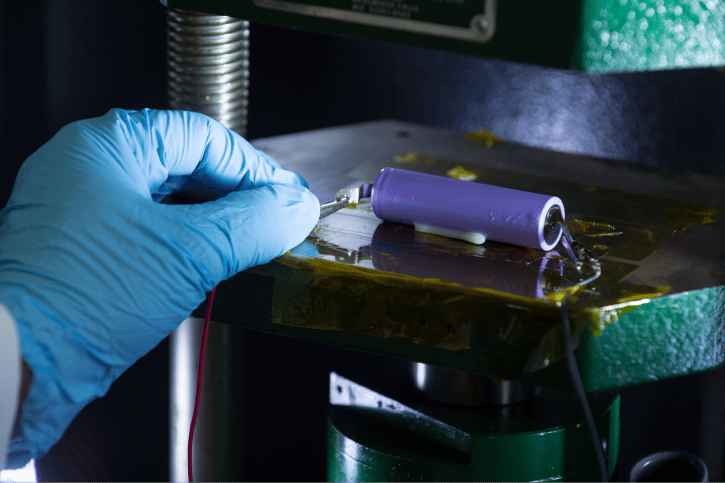
Battery Safety and Abuse Testing
Element delivers advanced battery safety and abuse testing for various chemistries and formats, helping identify risks, support certification, and meet global standards across diverse industries and applications.
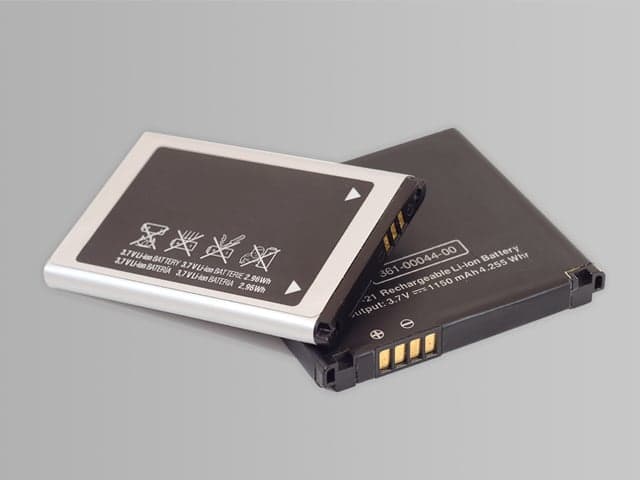
Lithium Battery Testing and Certification Services
Ensure safety, performance, and regulatory compliance with comprehensive lithium battery testing. Element's advanced laboratories can test lithium metal and lithium-ion batteries for any application, from medical devices to electric vehicles.