
Knee Implant Testing
Transform your knee implant development with Element's comprehensive testing solutions that streamline regulatory submissions and accelerate time-to-market. Access dedicated testing frames, expert protocol development, and complete in-house capabilities—all under one roof. Get reliable data for FDA and CE approvals while advancing your designs through proven testing protocols with specialized technical guidance.
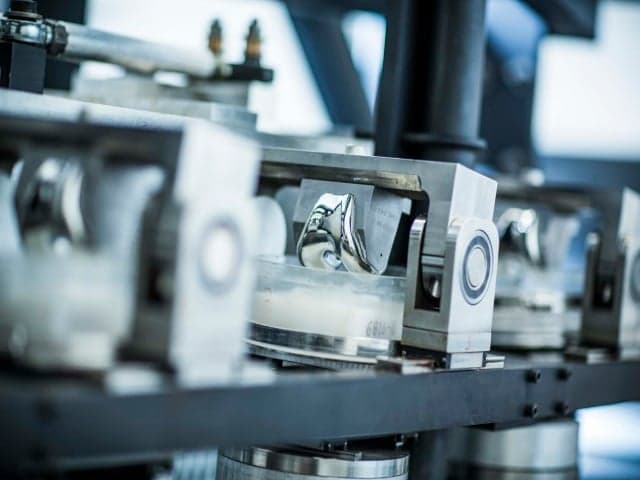
What is Knee Implant Testing at Element?
Knee implant testing evaluates the mechanical performance, durability, and safety of total knee replacement (TKR) devices. At Element, we provide comprehensive testing services for both bicondylar and unicondylar knee systems, covering fatigue testing, wear testing, and metallurgical evaluation to support your feasibility studies and regulatory submissions. Our expertise includes testing highly-constrained implants and evaluating components in both new and simulated worn conditions.
What Can Element Offer You For Knee Implant Testing?

Components and products we test
Components and products we test
Element's expertise covers complete TKR systems and individual components. We test femurs, patellas, tibial trays, and tibial bearings for both bicondylar and unicondylar knee systems. Our specialized capabilities extend to UHMWPE components and high-flexion designs, with proven experience in evaluating total knee prostheses from individual parts to complete assemblies. We also provide testing for highly-constrained implants, offering a comprehensive assessment of these specialized designs.
Key tests offered
Key tests offered
Knee Implant Fatigue Testing
- Tibial Tray (ASTM F1800 & ISO 14879)
- Tibial Bearing Components
- Femoral Implants
- Tibial Insert Endurance under High Flexion
Contact Pressure & Constraint Testing
- Contact Pressure
- Constraint Testing (ASTM F1223)
Knee Implant Wear Testing
- ISO 14243-1 or ISO 14243-3
These tests include:
- Fatigue Testing
- Wear Testing
- Range of Motion Testing
- Contact Pressure using TEKscan capabilities
- Bearing Interlocking Strength
- Constraint
- Particle Evaluation
- Particle Evaluation including wear debris generation assessment and SEM/EDS analysis
Methods and solutions offered
Methods and solutions offered
Benefit from complete testing support including protocol development, design assistance, and comprehensive project management. Our solutions encompass both force-controlled and displacement-controlled testing options, utilizing dedicated frames for efficient turnaround times. We offer specialized setups for feasibility studies and support throughout your regulatory submission process. Our material aging protocols ensure accurate simulation of real-world conditions to provide more realistic performance data.
Knee Implant Fatigue Testing
Element’s fatigue testing validates knee implant designs for both feasibility and submission purposes. This includes:
- Tibial Tray (ASTM F1800 & ISO 14879): Fatigue testing is done by fixing one half of the tibial baseplate and applying a load to the unsupported half. This test runs for 10 million cycles with five samples surviving under at least 900 N of load.
- Tibial Bearing Components: For posterior-stabilized implants, shear fatigue testing on the UHMWPE tibial post is done to develop an S/N curve, with at least one sample running out to 10 million cycles.
- Femoral Implants: Fatigue properties are evaluated under various flexion angles and cementing configurations. Both S/N curves and minimum run-out testing are conducted.
- Tibial Insert Endurance under High Flexion: Tests UHMWPE inserts’ resistance to deformation and fracture under repeated deep knee bends. The test runs for 220,000 cycles at 2,275 N load, with pre- and post-test scans and constraint tests.
Contact Pressure & Constraint Testing
These tests measure the contact mechanics and resistance of knee implants to dislocation and motion.
- Contact Pressure: Pressure-sensitive films are used to analyze tibiofemoral and femoral-patellar contact stress at various flexion angles and loads.
- Constraint Testing (ASTM F1223): Both translational and rotational forces are applied to induce subluxation or a specific angle of rotation. This is crucial when comparing different types of knee inserts.
Knee Implant Wear Testing
Wear testing measures the wear rates between the femoral component and tibial insert and patella button under simulated knee movements. This testing examines the generation of wear debris and includes SEM/EDS analysis of wear particles to support your safety assessments.
- ISO 14243-1 or ISO 14243-3: Simulates complex knee motions with axial, anterior/posterior, flexion/extension, and tibial rotation forces. The test runs for up to 5 million cycles, and post-testing mass loss is measured, followed by particle analysis using SEM/EDS. We offer both kinematic-based (displacement-controlled) and force-based (force-controlled) test methodologies to match your specific testing requirements.
Cutting-edge equipment we use
Cutting-edge equipment we use
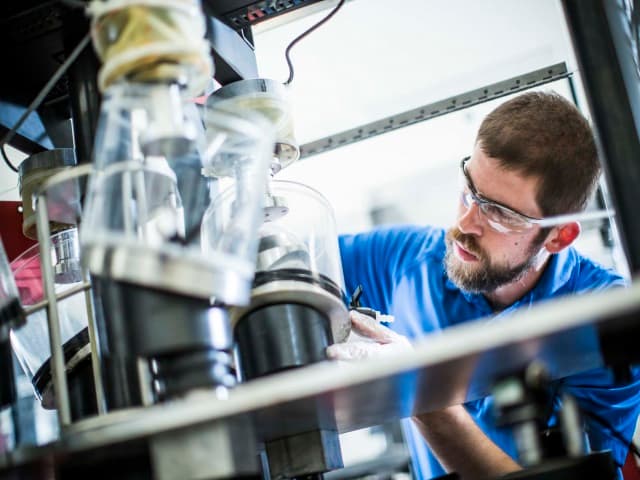
Advance your testing with our specialized equipment including dedicated knee implant testing frames, six test stations with two load/soak controls, environmental chambers for bovine solution testing, TEKscan pressure measurement systems, and SEM/EDS equipment for comprehensive particle analysis. Our facilities feature purpose-built testing environments optimized for knee implant evaluation.
Which labs offer this service
Which labs offer this service
Our Cincinnati laboratory is Element's global Center of Technical Excellence for medical device testing, supported by our team operating from Life Sciences hubs worldwide. Find your nearest hub on our Locations Page.
High-flexion testing expertise
Standards we test to and components we test
American Society for Testing and Materials
- ASTM F1223
- ASTM F1672
- ASTM F1800
- ASTM F1814
- ASTM F1800
- ASTM F2083
- ASTM F2723
- ASTM F2777
International Standards Organization
- ISO 14879
- ISO 14242
- ISO 14243
- Total knee prostheses
- Femoral components
- Tibial trays and bearings
- Patellar components
- UHMWPE inserts
Your Challenges, Our Solutions
Complex regulatory pathways
Development timelines pressure
Component testing management
Standards compliance efficiency
Element Experts at your service

Why Choose Element

Complete testing solution
Dedicated infrastructure
Regulatory expertise
Custom capabilities
10+years
6dedicated test stations
10M+cycles testing capability
5+comprehensive test types
Related services
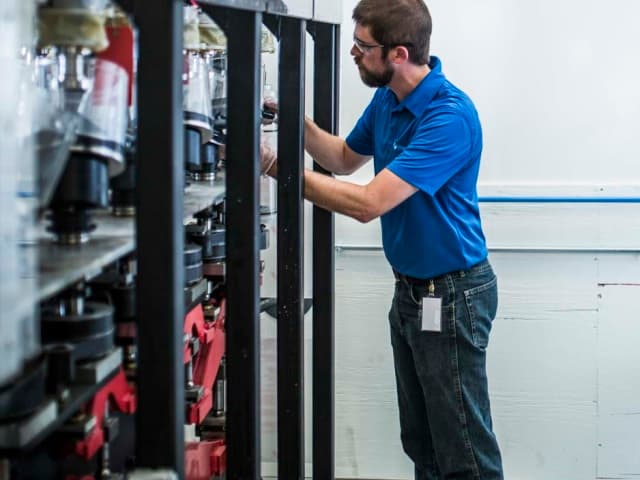
Orthopedic Device Testing Services
Accelerate orthopedic device development with Element's comprehensive testing services. From hip to spinal implants, we ensure regulatory compliance while reducing time-to-market. Expert support at every stage—prototype to commercialization.
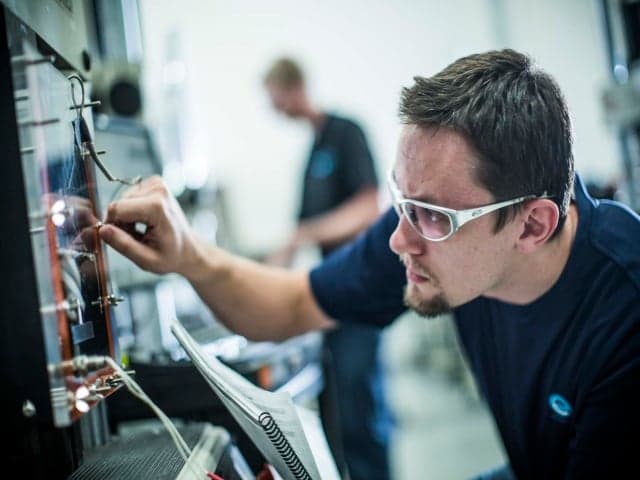
Bone Plate, Bone Screw, and Fixation Device Testing
Our testing service verifies the mechanical integrity of bone plates, screws, and fixation devices through ASTM-standard fatigue, bending, and torsion evaluations, providing critical data for regulatory compliance and trauma reliability.
Foot, Ankle, and Shoulder Replacement Implant Testing
Element offers expert foot, ankle, and shoulder implant testing, covering fatigue, wear, and constraint analysis to support orthopedic device development and regulatory submissions.
Hip Joint Prosthesis Testing
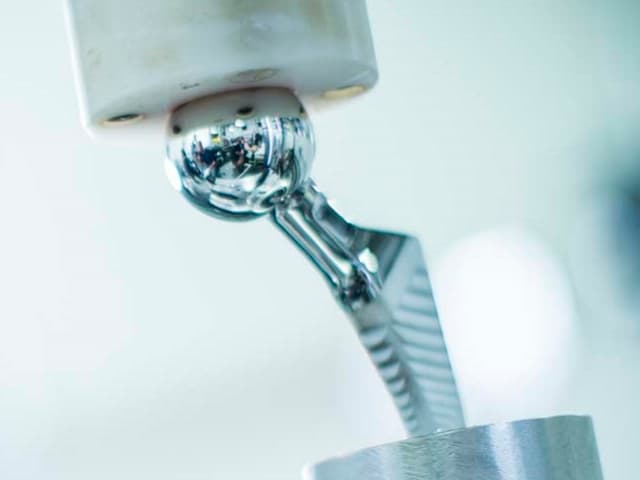
Element provides ISO 7206-compliant hip joint prosthesis testing, assessing endurance, fatigue, and compression to support safe, high-performing medical devices worldwide.

Testing of Porous Structure and Porous Coatings for Medical Devices
Element provides porous structure testing for medical devices, evaluating mechanical and metallurgical properties to support regulatory compliance, product development, and supplier validation.

Strain Analysis Services
Element's experts help you make informed decisions about your product's performance including strength, load limits, useful life, and operational performance parameters via strain analysis.